
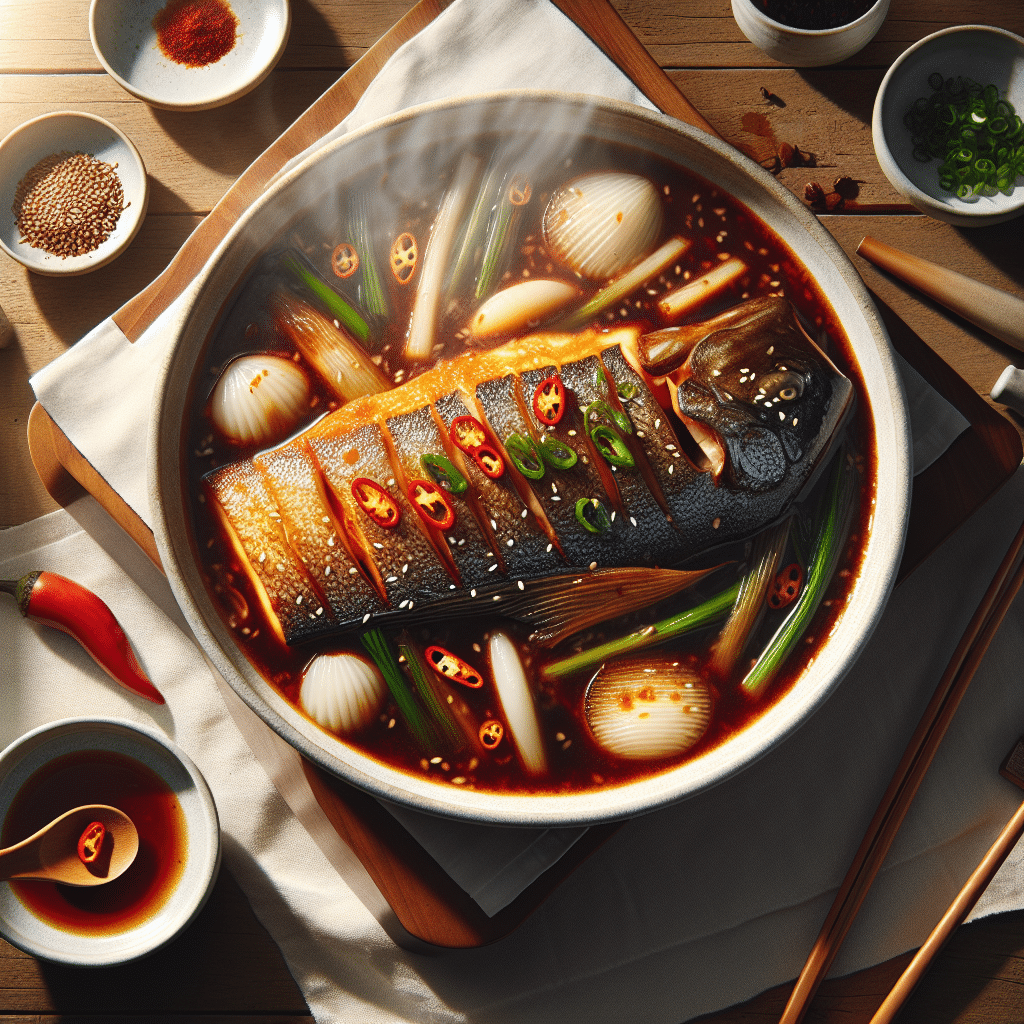
Daegu Jorim: A Comforting Korean Braised Cod Dish
Daegu jorim—Korean braised cod—is one of those dishes that feels both comforting and elegant. It’s simple enough for a weeknight dinner yet flavorful enough to impress anyone curious about Korean home-style cooking. With its glossy, spicy‑sweet soy braise and tender white fish, it shows how everyday ingredients can become something deeply satisfying.
What Makes This Dish Special
The beauty of daegu jorim lies in its balance. The sauce enhances the delicate flavor of cod rather than overpowering it. As the braising liquid reduces, it turns glossy and rich, coating the vegetables and fish in a savory, slightly spicy, gently sweet glaze. Even those new to Korean cooking often find this dish approachable and exciting.
Key Ingredients
- Cod fillets or thick cod steaks, preferably with skin
- Korean radish (mu) or daikon, cut into chunks
- Onion slices and carrot pieces
- Soy sauce, gochujang (optional), and gochugaru or mild chili flakes
- Garlic and ginger
- A splash of rice wine or mirin
- Sugar or rice syrup
- Green onions, red chili slices, and sesame seeds
- Optional additions: potatoes, tofu, anchovy broth, sesame oil
How to Make It at Home
1. Prepare the ingredients
Cut the radish into thick pieces so they hold their shape. Slice the onion and carrot. Rinse the cod gently and pat dry.
2. Mix the braising sauce
Combine soy sauce, chili flakes, gochujang (if using), garlic, ginger, sugar, and rice wine. Add a little water or broth to help the flavors blend as they cook.
3. Layer the vegetables
Place the radish at the bottom of a shallow pot, then add onions and carrots. Pour in the sauce so the vegetables are partially submerged.
4. Simmer until tender
Cook on medium heat until the radish begins to turn translucent and absorbs some flavor. Stir occasionally to prevent sticking.
5. Add the cod
Lay the cod pieces on top of the simmering vegetables. Spoon some sauce over the fish. Cover and cook gently on low heat so the fish stays moist and flaky.
6. Reduce the sauce
Once the fish is nearly done, uncover the pot and let the sauce thicken. Spoon the reduced glaze over the fish and vegetables.
7. Finish and serve
Top with green onions, sesame seeds, and red chili slices. Serve immediately while the sauce is glossy and warm.
Tips, Variations, and Serving Ideas
- For a milder version, use less gochugaru and skip the gochujang.
- Add tofu at the end for extra protein and a soft, absorbent texture.
- Daikon is a great substitute if Korean radish isn’t available.
- A piece of kelp or a splash of anchovy broth adds deeper savoriness.
- Serve with warm white rice and a few side dishes for a complete meal.
- Leftovers are even better the next day—reheat gently to keep the fish tender.
- A non‑spicy version with soy sauce, garlic, ginger, and black pepper is great for kids or those who prefer mild flavors.
- This dish sits perfectly between rustic home cooking and vibrant Korean comfort food.
Why People Love It Worldwide
Daegu jorim reflects the heart of Korean home cooking—balanced flavors, respect for ingredients, and dishes meant for sharing. It shows that Korean cuisine is far more diverse than barbecue and spicy stews. Braised dishes like this are everyday staples in many Korean households, offering warmth, depth, and nourishment.
As Korean ingredients become more accessible globally, daegu jorim has become an inviting gateway to home-style Korean flavors. Its lightness also appeals to those seeking wholesome, vegetable-forward meals built around lean proteins like cod.
Most of all, it captures the spirit of a Korean table: warm, communal, and welcoming.
A Warm Closing
If you want to explore Korean flavors beyond the classics, daegu jorim is a wonderful place to start. It’s easy to make, full of character, and comforting in any season. Try it once, and it may become one of your go‑to home dishes. Enjoy the tender fish, the silky braise, and the cozy aroma—and bring a touch of Korean home cooking to your table.
Craving more Korean flavors?
Explore more comforting and delicious Korean dishes you can try at home:
Recommended Products
- Korean braising pan – great for simmering fish and radish
- Gochujang paste – adds mild heat to the sauce
- Korean soy sauce – key for the savory braise
- Korean home‑style cookbook – more comforting dishes to try
As an Amazon Associate, I earn from qualifying purchases.