
Exploring Seoul’s Ihwa Mural Village and the Evolution of Korea’s Urban Art Culture
Introduction
Ihwa Mural Village is a small hillside neighborhood where old residential lanes meet layers of public art. What began as a revitalization project has become a living example of how Korea interacts with urban creativity—embracing it at times, questioning it at others, and constantly adjusting. It’s a place for visitors who enjoy slow wandering, textured streets, and the blend of contemporary art with a historic setting.
Over the years, its murals have appeared, faded, and sometimes disappeared in response to local sentiment and tourism. The result is a village that adapts continuously, offering insight into how communities balance everyday life with sudden attention.
What Makes the Village Special
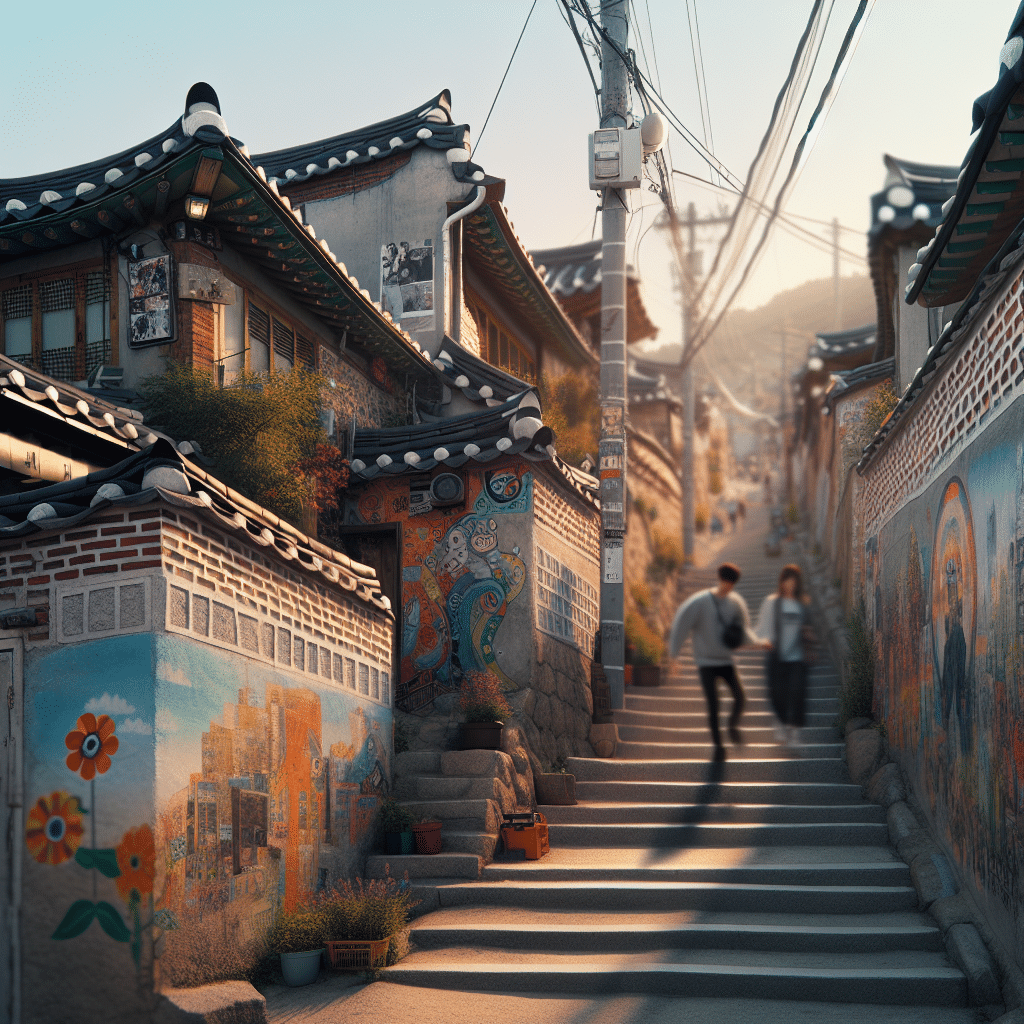
Steep staircases, tiled rooftops, and aging concrete walls set the tone here. Many murals show natural wear—softened colors, peeling paint, cracked surfaces—giving the impression that the artwork has grown into the neighborhood rather than being carefully preserved.
Golden hour brings a warm, soft light that highlights the uneven stairways and textured walls. Small details add charm: potted plants outside doors, laundry drying above an alley, a cat perched near a railing. Even the tangle of wires overhead reflects the village’s age and authenticity.
Another defining feature is change. Some murals that once drew large crowds are now gone, replaced or painted over. New pieces appear quietly. Each visit captures a particular moment in the village’s ongoing transformation and its evolving role in Seoul’s urban art culture.
What to See and Do
Wandering uphill is the heart of the experience. Along the way, you’ll find:
- Murals and mosaics in various styles
- Small sculptural elements built into walls or stairs
- Weathered textures—brick, plaster, rusted metal—interacting naturally with the artwork
Higher in the village, small openings between homes reveal layered views of Seoul below. These viewpoints feel casual and organic, shaped by the hillside rather than deliberate design.
You’ll also notice how residents personalize their surroundings with potted gardens, reused containers turned into planters, and handmade seating corners. The best approach is to explore freely. Every turn offers something different: a faded flower painting, a tiled pattern hidden near a doorstep, or light catching a wall at a perfect angle.
Photography is especially rewarding. Narrow alleys create strong depth, and the shifting sun produces dramatic contrasts. During golden hour, long shadows fall across the steps while the village glows softly. People often capture silhouettes, warm light on plants, or glimpses of the city framed between rooftops.
When to Visit
Golden hour—just before sunset—is the most atmospheric time. The angled light reveals textures, enriches colors, and creates ideal conditions for photos. Mornings offer cooler air and fewer visitors, though the light is brighter and more direct.
Afternoons and weekends tend to be busier, especially when locals and travelers arrive in greater numbers. Because the paths are narrow, crowds move slowly and can change the feel of the area.
Seasonal notes:
- Spring: flowers in pots and gardens add color
- Autumn: crisp air and long shadows emphasize the village’s steep hills
- Summer: vibrant but humid
- Winter: quiet, clear views, and fewer visitors
Tips for Visitors
- Walk quietly and avoid blocking doorways—this is a residential neighborhood.
- Photography on public paths is fine; photographing private windows or interior spaces is discouraged.
- Wear comfortable shoes—the stairs are steeper than they appear.
- Explore slowly. Many murals are subtle or partly hidden.
- Take time to notice local life: residents watering plants, children walking home, or neighbors chatting on their steps. These moments reveal how the community continues to live alongside its evolving creative identity.
Frequently Asked Questions
Is Ihwa Mural Village still worth visiting?
Yes. Even as murals change, the atmosphere, alleys, and hillside views make it a memorable place to wander.
How long does it take to explore?
Most visitors spend one to two hours walking through the village and taking photos.
Are all the famous murals still there?
No. Some well‑known pieces have been removed or repainted, but the village continues to evolve with new artwork and shifting textures.
Is the walk difficult?
The climb can be moderately steep, but most visitors manage it comfortably with pauses. Good shoes help.
Can I visit early in the morning?
Yes. Mornings are quiet and peaceful, offering a calm atmosphere and fewer people.
This revised Markdown post is ready for WordPress.
✈️ Travel in Korea
This article is part of our Travel in Korea guide series, where we share walking routes, night views, local neighborhoods, and everyday travel experiences across Korea.
| Related Post | Daegu 83 Tower Observatory Night Skyline Guide: Best Views, Photo Spots & Tips |
| Related Post | Yeonnam-dong Gyeongui Line Forest Park Walk Guide: Routes, Photo Spots & Cafes |
Recommended for you
- Korea travel guidebook – helpful for planning Seoul walks
- Compact travel camera – good for mural and street photos
- Travel phone gimbal – keeps videos smooth on steep paths
- Universal travel adapter – useful for charging gear in Korea
As an Amazon Associate, I earn from qualifying purchases.