
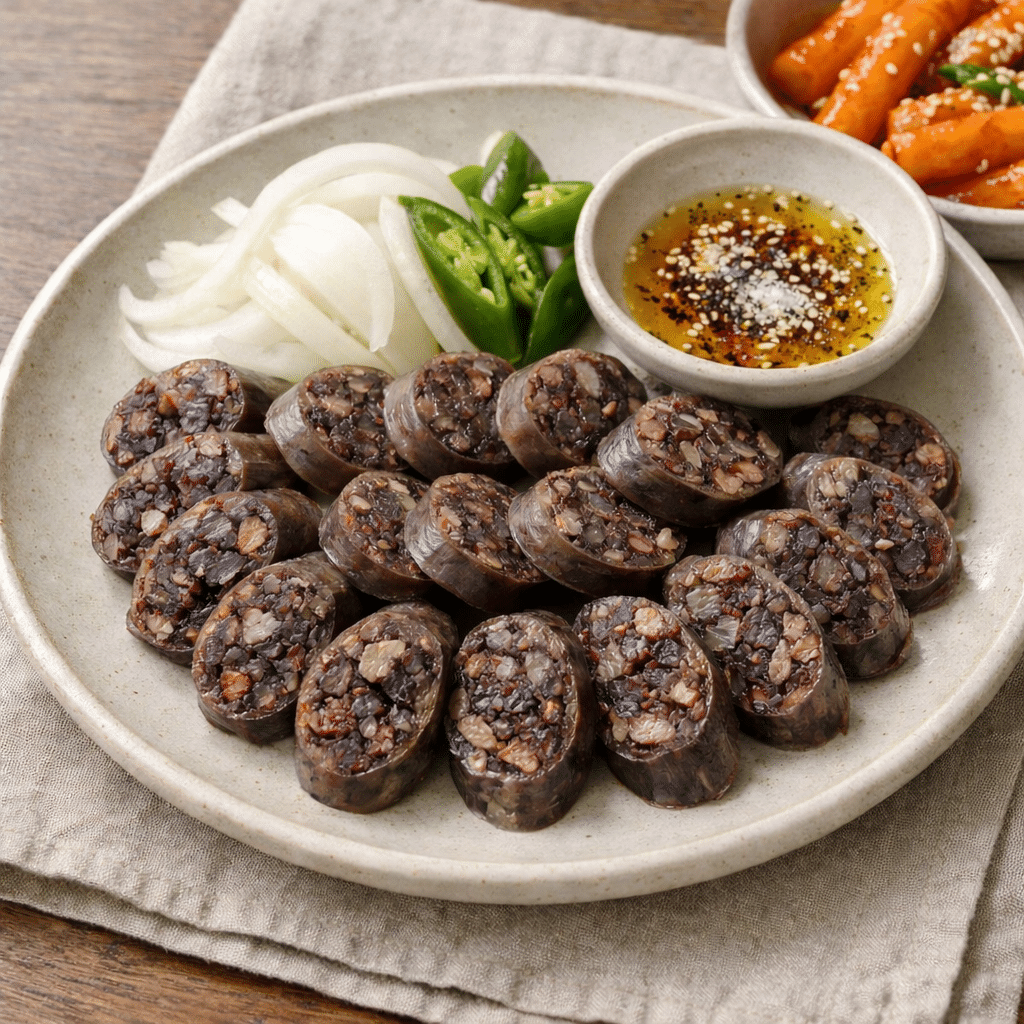
🎧 Korean Sundae Plate Recipe: How Koreans Make This Classic Comfort Food at Home ASMR Version:
A Little Korean Everyday Story
Sundae served with warm, glossy tteokbokki sauce is a quick comfort snack many Koreans enjoy on relaxed afternoons, after school, or whenever that familiar street‑food craving hits. It isn’t considered a formal recipe at home—more of a simple, “There’s sundae from the market, let’s make a sauce.”
In Korea, sundae is rarely eaten alone. It’s almost always served as a plate, sliced and arranged with simple sides like sesame oil salt, sliced onions, or spicy gochujang-based dips. This way of eating isn’t about decoration—it’s about balance. The soft, savory interior of the sundae contrasts with crunchy vegetables and bold dipping flavors, turning a simple sausage into a full, comforting meal that feels deeply familiar to Koreans.
For anyone who grew up near a traditional market, this plate feels especially nostalgic. Freshly steamed sundae comes home still warm in its plastic bag, and the sauce follows naturally: an easy simmer of spicy‑sweet red made the same way you’d prepare tteokbokki.
How Koreans Really Make This at Home
This dish is usually cooked without measuring. The sauce is adjusted by instinct—gochujang, a little sugar, a splash of soy sauce, then water until it looks right. Everyone has their own version shaped by family tastes or neighborhood stalls.
Heat control is simple: high heat to soften aromatics, medium once the sauce starts bubbling. Sundae is delicate, so it’s warmed separately or added last to keep it tender.
Overall, it’s about convenience and mood—warm sauce, soft sundae, and a plate meant to be enjoyed with toothpicks while chatting.
Ingredients
Main Ingredients
- Pre‑cooked Korean sundae (store‑bought is fine)
- Green onion
- Sesame seeds
- Salt (optional, for dipping)
Sauce Ingredients
- Gochujang
- Gochugaru
- Soy sauce
- Sugar
- Minced garlic
- Water
- A splash of neutral oil
Step‑by‑Step Cooking
1. Warm the sundae
Steam for a few minutes or gently heat in a covered pan with a splash of water.
Keep the heat low to prevent the casing from bursting.
2. Start the sauce base
Heat a small pan over high heat with a little oil.
Add garlic and half of the chopped green onion and stir until fragrant.
3. Build the tteokbokki sauce
Lower to medium heat. Add gochujang, gochugaru, soy sauce, sugar, and water.
Simmer for a few minutes until glossy and slightly thick.
4. Plate everything
Slice the warm sundae and place it on a plate.
Serve the sauce on the side or drizzle lightly over the top.
Finish with remaining green onion and sesame seeds.
Korean Cooking Tips
- Sundae tastes best warm, not hot—overheating makes it crumbly.
- Tteokbokki sauce thickens as it cools, so remove it from the heat while still a bit loose.
- If the flavor seems flat, a small splash of soy sauce brightens it quickly.
How Koreans Eat It
Most people dip each slice lightly into the sauce rather than soaking it. Some enjoy a small dish of salt‑and‑pepper on the side for a more traditional touch.
Leftover sauce never goes to waste—it’s great with noodles, tteok, or even leftover rice cakes. Extra sundae is often pan‑fried the next morning for a crisp edge.
Variations
- Less spicy: Reduce gochugaru and add a bit more sugar or water.
- Spicier: Add extra gochugaru or a pinch of chili flakes with seeds.
- Easy shortcut: Use store‑bought tteokbokki sauce packets and thin with water.
A Gentle Closing
This simple sundae plate captures the cozy, everyday warmth of Korean home cooking. Try it once, and you’ll see why it remains a beloved, effortless snack—perfect whenever you want a small taste of Korean comfort.

Ask Seoul Unnie
Still confused by Korean-only menus or everyday situations like this?
Ask Seoul Unnie — real, practical answers from someone living in Korea.
🍜 Korean Food Guides
This article is part of our Korean Food guide series for foreigners.
### Related Guides
Recommended for you
- Korean gochujang paste – essential for the tteokbokki‑style sauce
- Korean gochugaru – gives the sauce its warm spice
- Korean-style steamer pot – useful for gently warming sundae
- Korean home cooking cookbook – learn more simple market‑style dishes
As an Amazon Associate, I earn from qualifying purchases.