
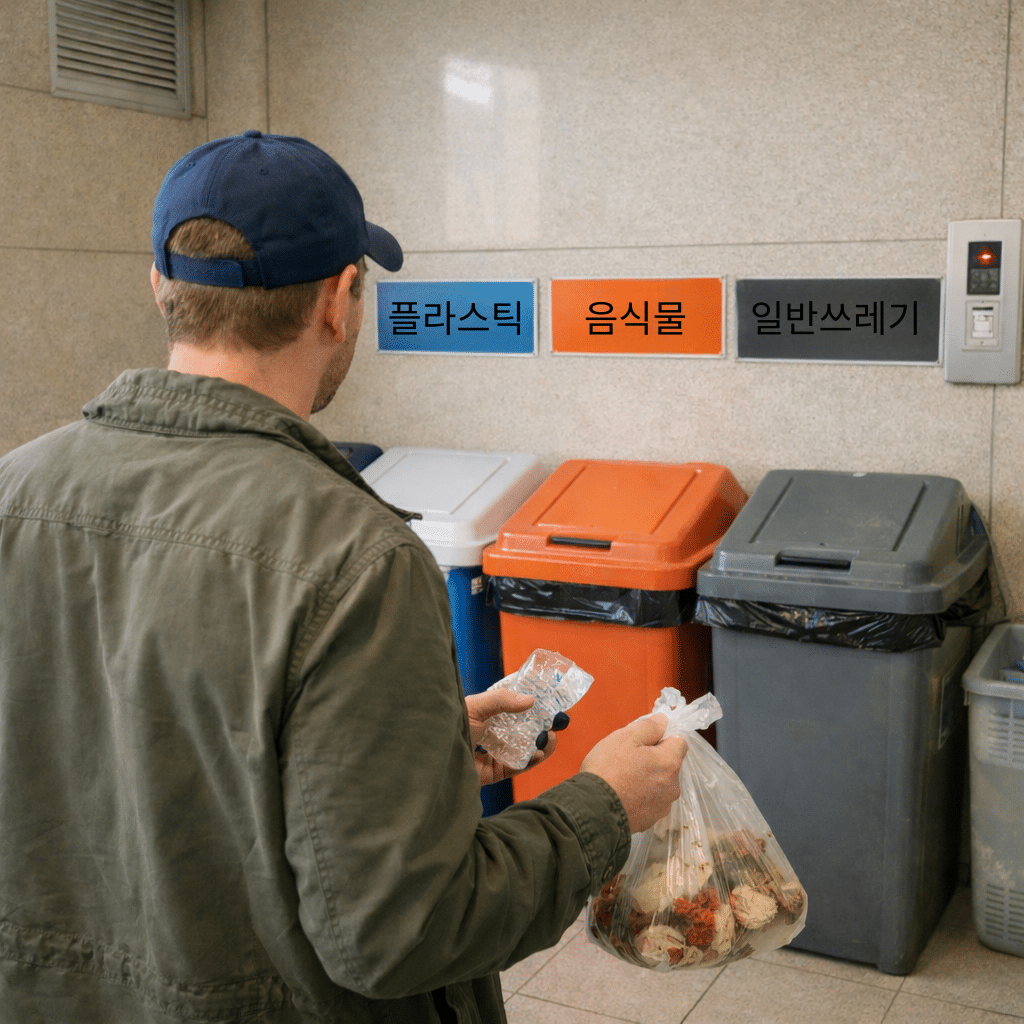
The Problem Foreigners Face
You finish a drink or meal at home, walk confidently to the recycling area, and then stop cold.
All the bins are labeled only in Korean.
You can’t tell which one is for plastic, which one is for paper, or whether food‑stained items belong in recycling or general trash.
With neighbors walking by, the pressure builds. Suddenly you’re standing there holding a yogurt cup, a cardboard sleeve, and a plastic lid—unsure what goes where.
If you live in Korea, recycling mistakes are not just embarrassing. They can lead to warning stickers on your trash or even fines. The hardest part is that most recycling labels are written only in Korean, with no pictures or English explanations. Once you learn a few key Korean words and patterns, however, Korean trash rules suddenly become much easier to follow.
Why This Happens in Korea
Korea separates waste more strictly than many other countries.
National recycling rules are consistent, but apartment complexes often use their own bin labels. Most rely only on Korean terms, assuming residents already understand the system.
For newcomers, this mix of strict rules and inconsistent signage creates a confusing experience.
What You Should Do (Step-by-Step)
1. Look for key Korean words
Focus on a few essential terms. Recognizing the first character or overall shape is enough to match items to the right bin.
• 플라스틱 – plastic
• 캔 – cans
• 종이 – paper
• 비닐 – vinyl/plastic film
• 병 – glass bottles
• 일반쓰레기 – general trash
• 음식물 – food waste
2. Separate items before you head outside
At home, remove caps, empty liquids, and give containers a light rinse.
Pre-sorting makes the bin area much less stressful.
3. Follow the “clean and simple” rule
• Dirty with food grease (like an oily pizza box)? General trash.
• Clean and made of one material? Recycle it.
• Made of multiple materials? Separate what you can, then recycle each part individually.
4. Use the pictures printed on the bins
Most apartment complexes include small images under the Korean labels.
Match your item to the picture even if you don’t understand the text.
5. When unsure, choose general trash
There’s no penalty for placing recyclables in general waste, but you can be fined for putting the wrong item into recycling.
When in doubt, use 일반쓰레기 (general trash).
What NOT to Do
• Don’t leave mixed trash bags on the ground—items must be separated.
• Don’t put food scraps anywhere except the designated food waste bin.
• Don’t assume anything that “looks plastic” belongs in plastic recycling.
Quick Survival Tip
Take photos of your building’s recycling signs during your first week.
Use them as your personal reference guide whenever you sort.
This revised version is polished, friendly, and ready to post on WordPress.

Ask Seoul Unnie
Still confused by Korean-only menus or everyday situations like this?
Ask Seoul Unnie — real, practical answers from someone living in Korea.
📘 Living in a Korean Home
This article is part of our Living in a Korean Home guide series for foreigners.
### Related Guides
Recommended for you
- Korean Alphabet Workbook – helps you read recycling labels
- Korean Vocabulary Flashcards – learn common trash and recycling words
- Pocket Language Translator – useful for checking labels on the spot
- Korea Travel Guidebook – includes practical living tips for newcomers
As an Amazon Associate, I earn from qualifying purchases.