
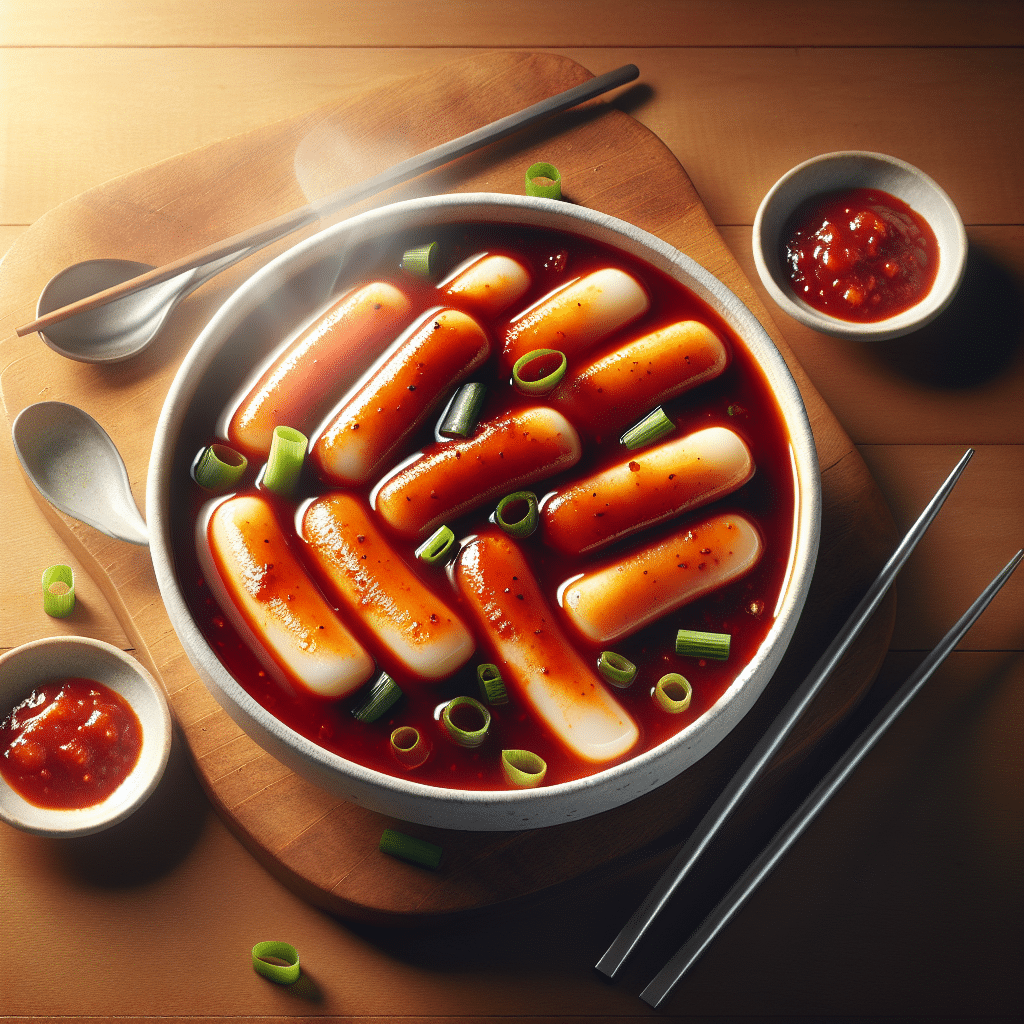
🎥 Watch the Tteokbokki ASMR Short on YouTube
Tteokbokki: A Spicy, Comforting Taste of Korea
Tteokbokki may look simple—chewy rice cakes in a bright red sauce—but one bite explains why it has become a global favorite. It’s warm, bold, comforting, and wonderfully addictive. Whether discovered at a street stall in Seoul or a modern restaurant abroad, this dish offers an inviting introduction to Korean flavors.
What Makes Tteokbokki Special
Tteokbokki stands out for its balance of heat, sweetness, and chewiness. The rice cakes are soft yet satisfyingly firm, absorbing the glossy red sauce as they simmer. The sauce, built around gochujang (Korea’s fermented red chili paste), adds depth and gentle heat. Fish cake brings savory richness, while green onions and broth round everything out.
Across Korea, tteokbokki is everywhere—school snack stalls, late-night eateries, and home kitchens. Wander through a street market and that spicy-sweet aroma bubbling from a huge pan is almost always tteokbokki calling out.
Ingredients
• Cylinder-shaped rice cakes (fresh, or soaked if frozen)
• Korean fish cake sheets, cut into strips or triangles
• Gochujang (medium-spicy recommended)
• Gochugaru for extra heat or color
• Light soy sauce or Korean soup soy sauce
• Sugar, honey, or rice syrup
• Water, anchovy broth, or kombu broth
• Sliced green onions
• Optional additions: boiled eggs, cabbage, garlic, sesame oil, mozzarella cheese, ramen noodles, mushrooms
How to Make Tteokbokki at Home
- Soak firm or frozen rice cakes briefly in warm water to soften them.
- In a wide pan, combine gochujang, soy sauce, sugar, and a little gochugaru with water or broth. Mix until the paste dissolves.
- Bring the sauce to a gentle simmer.
- Add the rice cakes and stir to coat evenly. Simmer until soft and chewy, stirring occasionally.
- Add the fish cake and continue simmering until the sauce thickens and clings to the rice cakes.
- Adjust sweetness, heat, or liquid to suit your preference.
- Add green onions near the end for freshness.
- Turn off the heat once the sauce is glossy and thick. Let it rest briefly before serving.
Tips, Variations, and Serving Ideas
• For milder tteokbokki, reduce gochugaru or use a sweeter gochujang.
• For spicier versions, add chili flakes or extra pepper powder.
• Melted mozzarella creates a popular cheese tteokbokki.
• Add instant ramen noodles for a heartier rabokki-style dish.
• Vegetables such as cabbage, onion, carrot, or mushrooms add texture and lighten the dish.
• Anchovy–kombu broth gives a more traditional flavor than water.
• Pair tteokbokki with simple banchan or fried seaweed rolls for a classic street food combination.
• Leftover sauce makes a great base for stir-fries or noodle dishes.
Why the World Loves Tteokbokki
Tteokbokki reflects the warmth and creativity of Korean food culture. Once a royal dish and later a street food staple, it now appears in cities worldwide, supported by growing interest in Korean cuisine through music, dramas, and global dining trends.
It’s approachable for newcomers, easy to customize, and uses ingredients increasingly available around the world. Whether enjoyed mild and comforting or fiery and bold, the core pleasure remains the same: soft, chewy rice cakes in an irresistible red sauce.
Tteokbokki offers a taste of everyday Korean comfort. Try making it at home, share it with friends, and enjoy the simple joy of this beloved spicy classic.
🍜 Korean Food Guides
This article is part of our Korean Food guide series for foreigners.
Want to explore more delicious Korean flavors?
Check out these popular dishes you’ll love:
Recommended for you
- Korean Gochujang Paste – essential for classic tteokbokki sauce
- Tteokbokki Rice Cakes – the chewy base of the dish
- Korean Fish Cake Sheets – adds savory flavor and texture
- Korean Home Cooking Cookbook – learn more Korean comfort dishes
As an Amazon Associate, I earn from qualifying purchases.
If you want to see tteokbokki come to life, check out this short ASMR-style video from Seoul. The sizzling sound, glossy sauce, and chewy rice cakes capture the real street-food vibe.