
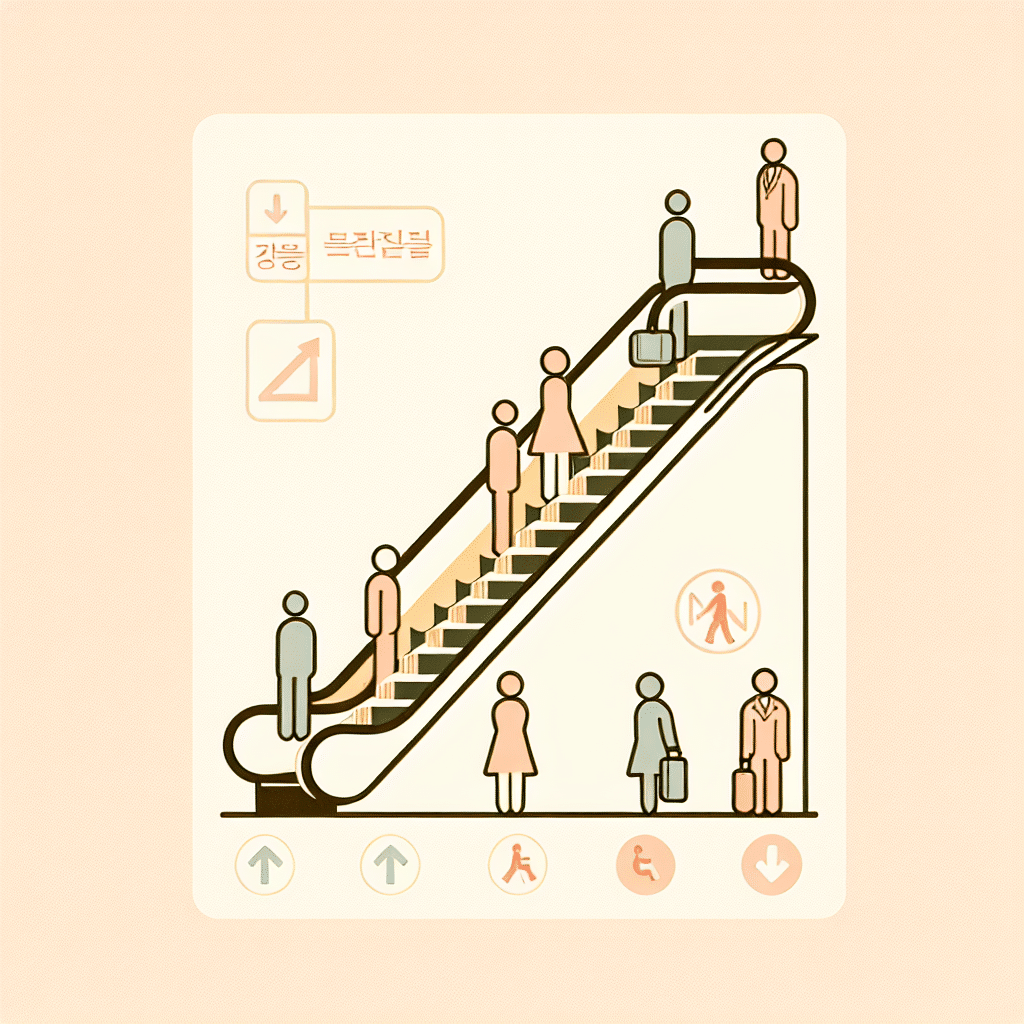
Escalator Etiquette in Korea: A Simple Habit That Makes a Big Difference
If you spend time in Korea—whether riding the subway, exploring shopping malls, or navigating busy transit hubs—you will almost certainly use escalators. One simple rule helps everything run smoothly: stand on the right, leave the left open for people who want to walk. It’s a small habit, but it quickly helps you blend into everyday life.
Why This Matters
Korea places strong value on keeping shared spaces efficient. In large, fast‑moving cities like Seoul and Busan, public transportation is crowded, especially during rush hours. To avoid bottlenecks, commuters naturally form two lanes on escalators:
- Right side for standing
- Left side for walking or passing
This pattern isn’t always written on signs, but it’s deeply ingrained. Even if you’re not rushing, someone behind you might be trying to catch a train or make a transfer. Keeping the left side open shows awareness and consideration—two qualities that shape daily manners in Korea.
How to Use This in Real Life
- Step onto the escalator and move immediately to the right.
- Stand still if you’re not walking; keep your bag close to your body.
- If you walk, stay on the left and keep a steady pace.
- Don’t stand in the middle—it blocks both sides.
- With friends, form a single line instead of standing side-by-side.
- If someone approaches from behind, simply stay on the right.
- Step off promptly at the end so the flow doesn’t jam.
With these small steps, you’ll move comfortably through Korea’s public spaces.
Real Situations You’ll Encounter
Morning Subway Rush
Lines form quickly on crowded escalators. Standing on the right keeps everything moving.
Roleplay: 뒤쪽에 서 있을게요. (I’ll stay on the right/back.)
Busy Shopping Malls
Families often stand on the right while store employees pass on the left.
Roleplay: 지나갈게요. (Excuse me, I’m passing.)
Transfer Stations
Many stations require quick movement between platforms, so commuters use the left lane to catch connections.
Roleplay: 먼저 갈게요. (I’ll go ahead.)
Traveling With Luggage
People with suitcases automatically stay on the right so others can pass safely.
Roleplay: 여기로 서 있을게요. (I’ll stand over here.)
Long Days of Sightseeing
When you’re tired, the right side gives you a chance to rest without blocking the flow.
Roleplay: 오른쪽으로 갈게요. (I’ll move to the right.)
Variations and Things to Keep in Mind
- Regional differences exist, but standing on the right is almost always correct.
- Some stations broadcast safety messages asking people not to walk, especially on rainy days, but the two‑lane habit remains common.
- Keep backpacks or bags from swinging into the passing lane.
- Groups should form a single line; blocking the left is considered rude.
- Avoid sudden stops, especially during peak hours.
- Children should stay on the right and hold the handrail; walking on the left isn’t recommended for them.
- If you have large luggage, consider using elevators instead.
- Even in crowded places, Koreans avoid pushing; if someone needs to pass, they may simply say 지나갈게요.
- Newer facilities may encourage standing on both sides for safety, but most people still follow the right‑stand, left‑walk habit.
Why Travelers Appreciate This Tip
Learning this small piece of etiquette helps you feel instantly more comfortable in Korea. It’s practical, easy to adopt, and gives insight into how locals prioritize cooperation and smooth movement in shared spaces. Many visitors say it helps public transportation feel more predictable and enjoyable.
Final Thoughts
Escalator etiquette might seem simple, but it shapes everyday life in Korea. By standing on the right and keeping the left clear, you support the flow of busy public spaces and show respect for local customs. Try it the next time you’re in a subway station or mall—you’ll feel more at ease and more connected to the rhythm of Korean life.
Need useful tips for life in Korea?
These guides make daily life much easier:
- How to Use 택배 보관함 in Korea (Never Miss a Delivery)
- How to Use Kakao T Smart Call to Avoid Taxi Refusals
Recommended for you
- Korea Travel Guide – helpful for navigating Korean cities
- Korean Etiquette Book – learn social norms before visiting
- Transit Card Holder – useful for subway and bus travel
- Korea Travel Adapter – needed for charging devices in Korea
As an Amazon Associate, I earn from qualifying purchases.