
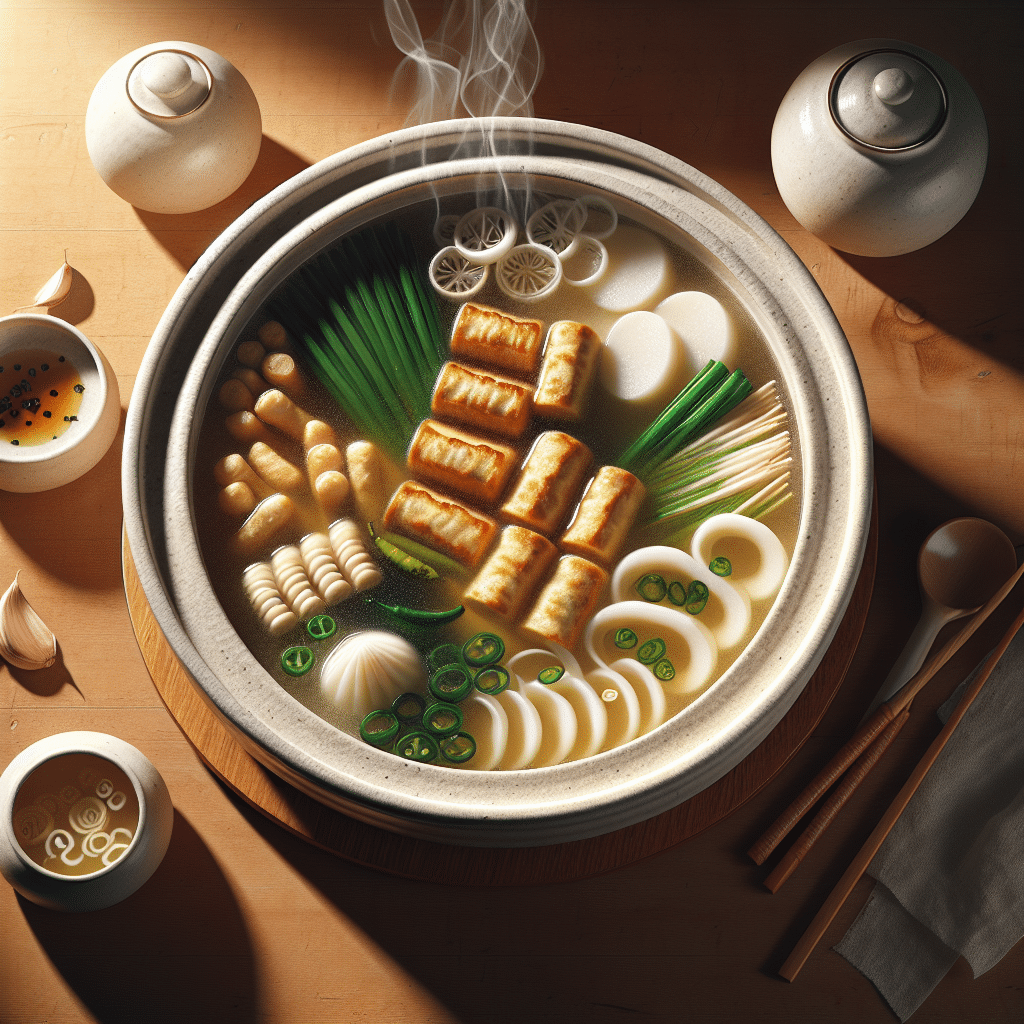
🎧 Korean Fishcake Soup: Authentic Odeng Guk Recipe, Broth Secrets, and Topping Ideas ASMR Version:
Korean Fishcake Soup: A Warm, Welcoming Taste of Everyday Korea
Steaming, comforting, and full of gentle flavors, Korean fishcake soup — known as odeng guk or eomuk tang — is one of the most beloved dishes in Korean daily life. It’s simple, affordable, and deeply nostalgic for anyone who grew up around Korean home cooking. For newcomers to Korean cuisine, it offers an easy, approachable way to experience how Koreans build warmth and depth from just a few humble ingredients.
This guide introduces the essence of authentic Korean fishcake soup and shows how to recreate it at home, inspired by the cozy bowls served at street stalls, markets, and family tables across the country.
What Makes This Dish Special
Korean fishcake soup captures the heart of everyday Korean cooking: light, clean flavors layered with sea-based umami and soft, chewy textures. The broth is clear yet deeply savory, thanks to a traditional combination of kelp, dried anchovies, garlic, and radish.
Fishcakes come in many shapes — flat sheets, rolled tubes, and folded pieces — each soaking up the warm broth beautifully. You’ll find this dish everywhere in Korea: at subway stalls, late-night markets, school snack shops, and simmering gently in home kitchens. It’s the kind of soup that feels like wrapping yourself in a warm scarf on a cold day.
Ingredients
A versatile dish, Korean fishcake soup can be adapted easily depending on what you have on hand. Here’s what you need:
• A mix of Korean fishcakes (flat, rolled, folded, or skewered)
• Korean radish (or daikon), cut into thick chunks
• A handful of dried anchovies for stock (heads and guts removed)
• Dried kelp
• Whole or lightly crushed garlic cloves
• Green onions (both white and green parts)
• Mild green chili peppers (optional for aroma)
• Soy sauce or Korean soup soy sauce, used lightly
• Salt or coarse sea salt
• Black pepper (optional)
• Optional: sliced onion, thinly sliced mushrooms, white pepper
• Optional dipping sauce ingredients: soy sauce, chopped green chili, a splash of vinegar, sesame seeds
How to Make Korean Fishcake Soup
1. Build the Broth
Place dried anchovies and dried kelp in a pot of water. Heat gently until the broth begins to infuse. Remove the kelp once it softens to keep the flavor clean.
2. Add Radish and Garlic
Add thick chunks of radish and a few garlic cloves. Let the broth simmer until the radish softens and turns slightly translucent, naturally sweetening the soup.
3. Remove Anchovies
Strain out the anchovies. Season the broth lightly with soy sauce or soup soy sauce, adjusting with a little salt.
4. Add the Fishcakes
Place the fishcakes into the broth. Keep them whole, skewered, or cut into bite-size pieces. Let them warm through — they cook quickly.
5. Add Aromatics
Add green onions and mild green chili peppers for freshness. You can also include a few slices of onion or mushrooms for extra depth.
6. Taste and Adjust
The soup should taste light, clean, and pleasantly savory. Adjust seasoning as needed.
7. Serve Hot
Enjoy directly from the pot. For a street-food touch, serve it with a small dipping sauce made from soy sauce, green chili, and sesame seeds.
Tips, Variations, and Serving Ideas
• For deeper flavor: Add more radish or simmer it longer. A tiny piece of dried shrimp also boosts umami.
• For a gentler broth: Use only kelp and radish for a mild, vegetarian-style base.
• For a bit of heat: Add a sliced spicy chili or a small pinch of Korean chili flakes.
• Add noodles: Glass noodles, thin wheat noodles, or udon turn this into a complete meal.
• To make it street-style: Keep the fishcakes on long skewers for a nostalgic market look.
• Simple side dishes: Serve with kimchi, pickled radish, or seasoned spinach.
• For dipping: Soy sauce mixed with chili and sesame seeds enhances the soft chew of the fishcakes.
Why People Love It Around the World
Korean fishcake soup represents the gentle side of Korean cuisine — mild, comforting, and nourishing. It’s approachable for beginners because it uses simple ingredients and straightforward steps. The broth is welcoming even for those unfamiliar with spicier Korean dishes.
As Korean street food gains international popularity, this soup stands out as a warm, communal experience. It reflects Korea’s coastal heritage and the country’s tradition of clear, balanced broths. Many travelers remember the comforting steam rising from pots at night markets or shareable skewers enjoyed with friends.
It’s not a flashy dish, but it’s unforgettable — a quiet, iconic piece of Korean food culture.
Closing
Korean fishcake soup is simple, soothing, and endlessly comforting. Whether you prepare it on a chilly evening or explore it while learning more about Korean cuisine, this humble dish offers a warm glimpse into Korea’s culinary heart. Try making it at home and let its gentle steam and golden broth bring a little Korean comfort to your kitchen.
Need useful tips for life in Korea?
These guides make daily life much easier:
- Kimchi Fried Rice: Easy Guide to Korea’s Most Popular Comfort Dish
- Tteokbokki Explained: What to Know Before Trying Korea’s Spicy Street Food
- Beginner’s Guide to Ordering Tteokbokki in Korea
Recommended for you
- Korean fishcake eomuk – for making authentic odeng guk at home
- Korean anchovy broth packs – easy base for rich soup stock
- Korean skewer sticks – for serving fishcakes the classic street style
- Korean hot pot pan – ideal for simmering soups and snacks
As an Amazon Associate, I earn from qualifying purchases.