
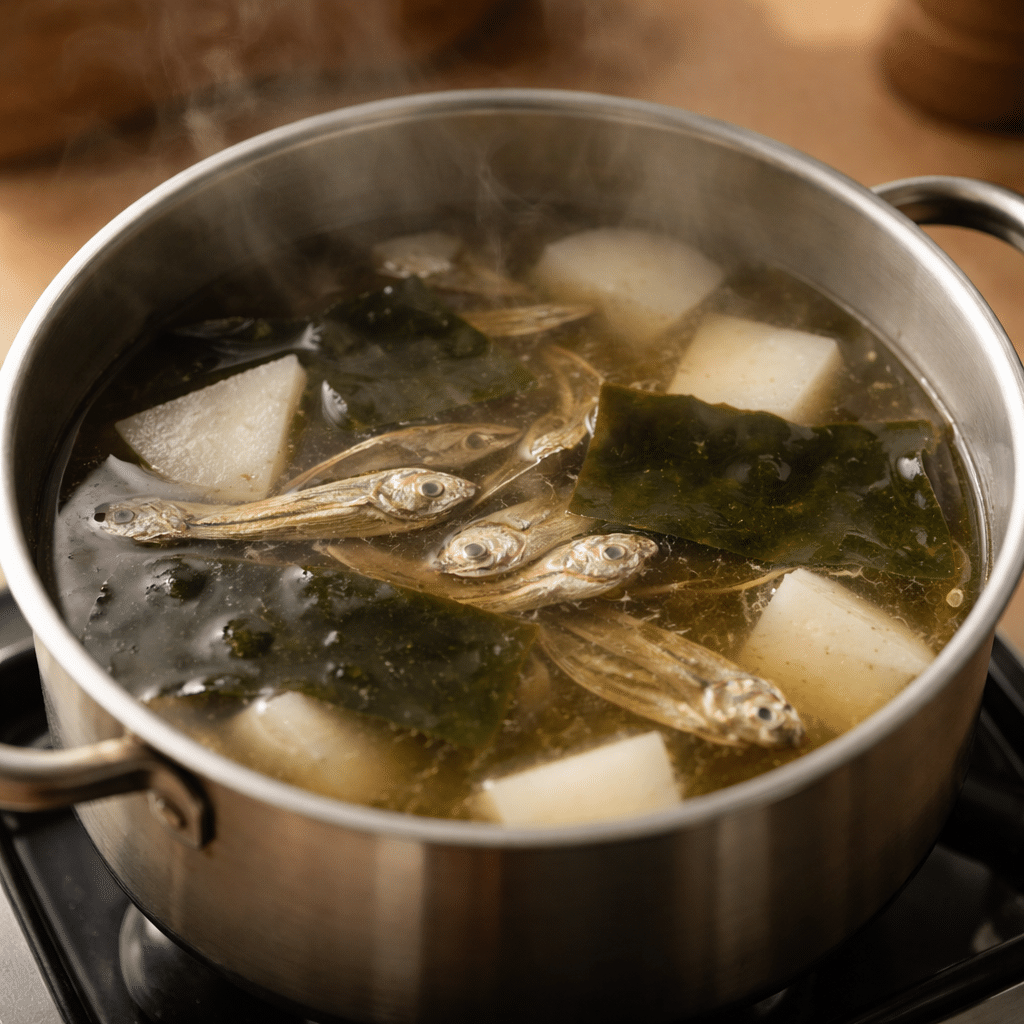
🎧 Korean Anchovy Broth Recipe: How Koreans Make It at Home ASMR Version:
A Simple, Everyday Broth in Korean Kitchens
In many Korean homes, a pot of anchovy broth quietly anchors daily cooking. It’s the base behind quick weekday soups, noodle bowls, and light stews—the kind of meals prepared almost without thinking. This broth isn’t treated as a special recipe; it’s more like meaningful boiling water. When someone says they’ll “make soup quickly,” this is usually where they begin.
It’s valued for being clean, comforting, and full of gentle depth. Families use it for breakfast soups, students pour it over noodles for an easy meal, and older generations rely on it for something warm and soothing. The flavor is savory yet simple—recognizable long before you can describe it.
What sets Korean anchovy broth apart is not just the simplicity of its ingredients, but the depth of flavor it brings to every dish. Anchovies and kelp (dashima) create a natural umami base that is both rich and clean, enhancing soups like doenjang jjigae, mandu-guk, and noodle soups with subtle savory notes. While some cooks simmer the broth for only 10 minutes, others recommend gentle simmering for up to 30 minutes to draw out maximum flavor without bitterness. Experimenting with small adjustments, such as adding radish or using a spice ball for anchovies, can make the broth clearer and more aromatic.
How It’s Really Made at Home
Most home cooks don’t measure. They throw in:
- A handful of dried anchovies
- A palm-sized piece of dried kelp (dashima)
- Maybe onion slices, green onion ends, or radish scraps
It’s all about instinct and balance. People adjust flavor by smell, by the color of the steam, or simply by habit.
The process starts with high heat to pull out flavor quickly, then settles into a short simmer. It doesn’t cook long, because the broth is meant to support—not dominate—whatever dish comes next, from tofu soup to tteokguk to noodle broth.
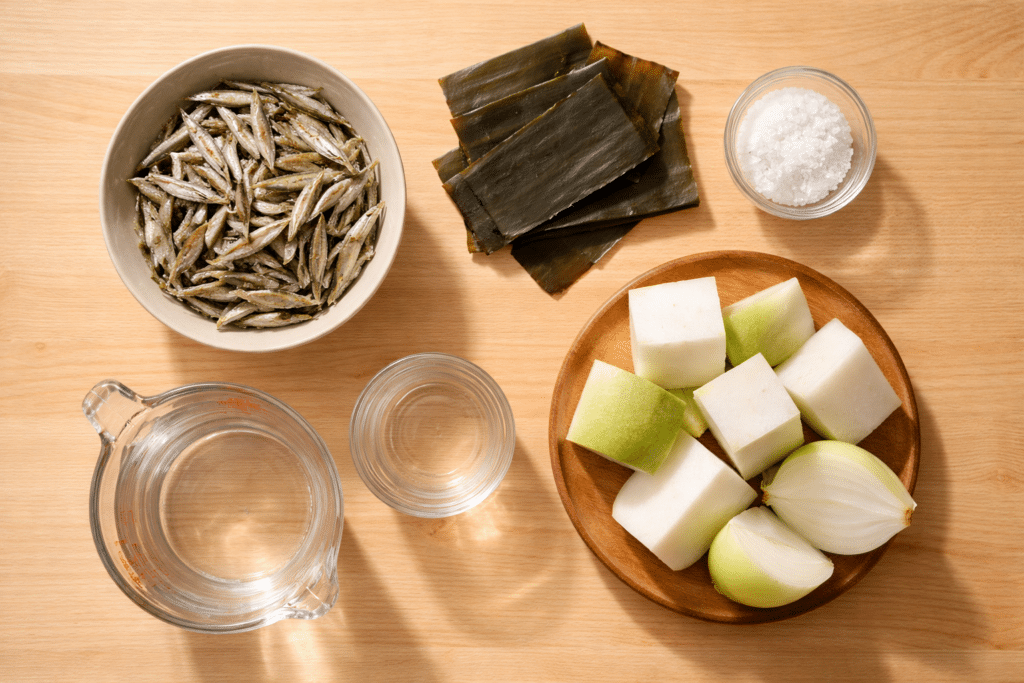
Ingredients
Main Ingredients
- Dried anchovies (medium or large; gutting optional)
- Dashima (dried kelp)
- Optional: onion slice, green onion ends, piece of radish
Sauce Ingredients
None. The final dish provides its own seasoning.
How to Make the Broth
Step 1: Prep the Pot
Add anchovies and dashima to a pot of cold water. Include optional vegetable scraps if available.
Step 2: Bring to a Strong Boil
Heat on high until it reaches a rolling boil. This extracts flavor quickly.
Step 3: Simmer Gently
Reduce to medium-low and simmer for 8–10 minutes until the broth tastes light but savory.
Step 4: Remove the Solids
Lift out the anchovies and dashima to keep the broth clean and prevent bitterness.
Tips from Korean Home Cooks
- Remove dashima once the water boils to avoid sliminess or bitterness.
- Anchovies flavor the broth fast; long simmering can lead to sharpness.
- Don’t toss boiled anchovies—some families season them lightly for a tiny side dish.
How Koreans Use This Broth
This is the base for countless everyday meals: doenjang-guk, fishcake soup, soft tofu soup, kalguksu, and simple tteokguk. Many people even pour it directly over noodles or rice cakes for a very light bowl.
Leftovers are saved with care. The broth is cooled and kept in the fridge for the week, ready for quick breakfasts or last-minute dinners. Some freeze small portions to upgrade instant noodles or make speedy porridge.
Variations
Mild Version
Keep the broth plain and add mild ingredients like tofu or zucchini. Season with a little soy sauce for a gentle taste.
Spicy Version
Mix gochugaru, minced garlic, and a splash of soup soy sauce into the finished broth for a lively base ideal for spicy noodle soups or kimchi stew.
Simple Substitute
If you don’t have anchovies, simmer dashima with dried shiitake mushrooms. The flavor is different but offers similar calm, savory depth.
A Warm Finish
Once you learn this simple broth, many Korean dishes become easier and more inviting to cook at home. It’s the quiet backbone of everyday meals—and a comforting way to start exploring the flavors of a Korean kitchen.

Ask Seoul Unnie
Still confused by Korean-only menus or everyday situations like this?
Ask Seoul Unnie — real, practical answers from someone living in Korea.
🍜 Korean Food Guides
This article is part of our Korean Food guide series for foreigners.
### Related Guides
Spam mayo rice bowl captures the everyday Korean home-style meal that many locals grew up loving.
Recommended for you
- Korean dried anchovies – for making clean, savory broth at home
- Dashima dried kelp – essential for classic Korean stock
- Korean-style soup pot – useful for quick everyday broths
- Korean home cooking cookbook – helps you use broth in more dishes
As an Amazon Associate, I earn from qualifying purchases.