
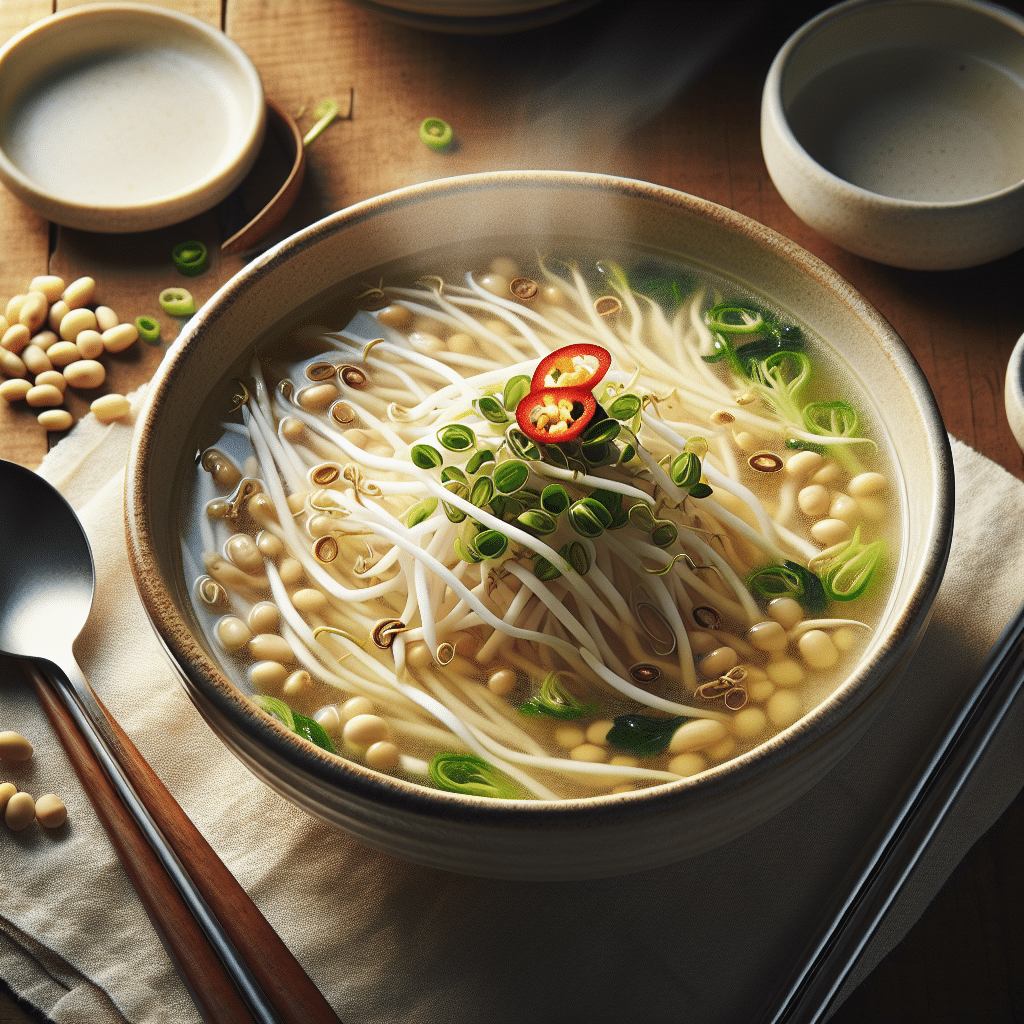
🎧 Kongnamul Guk Recipe: How Koreans Make Soybean Sprout Soup at Home ASMR Version:
A Comforting Bowl from Everyday Korean Kitchens
Kongnamul guk, or soybean sprout soup, is one of the most familiar dishes in Korean homes. It shows up on busy mornings, after long nights out, or whenever someone wants something warm, clean, and easy. Because soybean sprouts are inexpensive and cook quickly, this soup quietly supports countless meals across Korea.
Its charm lies in its clear, refreshing flavor. The aroma fills the kitchen within minutes, offering a sense of warmth without heaviness. For many Koreans, this is a soup that tastes like home, especially during cold seasons or hectic weeks.
This soup is one example of the everyday dishes that define Korean home cooking.
→ Korean Food: Home Cooking, Street Food, and Food Culture
How It’s Really Made at Home
Most Korean home cooks prepare this soup by feel. A handful of soybean sprouts goes into a pot, enough water is added to cover them, and the rest is simple intuition. The method depends more on high heat and quick cooking than on exact measurements.
The soup is almost always cooked at a rolling boil to keep the sprouts crisp and to avoid any grassy smell. Seasoning is gentle—just soy sauce, garlic, and salt—because kongnamul guk is meant to taste clean and soothing.
It’s a minimalist dish: a few ingredients, fast cooking, and no stress. Ask a Korean grandmother for instructions, and you might hear something like, “Boil the sprouts and season it. You’ll know when it tastes right.”
Ingredients
Main Ingredients
- Soybean sprouts
- Water
- Green onion
- Garlic
Seasoning
- Soy sauce (for soup)
- Salt
- Optional: Korean red pepper flakes (gochugaru)
- Sesame oil (a tiny splash, only if you like)
Step-by-Step Cooking
1. Prep the Sprouts
Rinse the soybean sprouts and remove any brown pieces. Keeping them slightly wet helps them steam quickly once heated.
2. Build the Broth
Place the sprouts and water in a pot and bring to a strong boil.
Keep the lid off after it starts boiling to maintain a clean flavor.
3. Season Lightly
Add soy sauce, garlic, and a pinch of salt.
Taste and adjust; the broth should feel bright, not heavy.
4. Finish with Green Onion
Turn off the heat and stir in sliced green onion.
Let the soup rest briefly so the flavors settle.
Korean Cooking Tips
- Keep the heat high to avoid a grassy smell.
- Season gradually; the flavor shifts quickly as the sprouts cook.
- Add green onion at the end to keep the taste fresh.
How Koreans Enjoy It
Kongnamul guk is usually served with rice and a couple of simple side dishes. It isn’t meant to dominate the table, but it brings warmth and balance to the meal. Some people add a spoonful of gochugaru to their own bowl for extra heat.
Leftovers reheat well and often taste even cleaner the next day. Many Koreans enjoy leftover kongnamul guk with rice and a fried egg for an easy breakfast.
Variations
Mild
Skip the gochugaru. A small drop of sesame oil can add a gentle, nutty aroma.
Spicy
Add gochugaru directly to the boiling broth. A sliced green chili also works for extra heat without overwhelming the soup.
Deeper Flavor
Replace part of the water with anchovy broth. This keeps the soup simple but adds more depth, a common variation in many homes.
A Gentle Closing
Kongnamul guk is a reminder that comfort often comes from the simplest dishes. If you enjoy making it, you may find yourself drawn to other everyday recipes that shape Korean home cooking—meals that feel humble, warm, and quietly satisfying.
🍜 Korean Food Guides
This article is part of our Korean Food guide series for foreigners.
Recommended for you
- Korean soybean sprouts – key ingredient for the soup
- Korean soup soy sauce – helps get the right clean flavor
- Korean gochugaru flakes – for the spicy version
- Korean-style cooking pot – useful for quick boiling
As an Amazon Associate, I earn from qualifying purchases.