
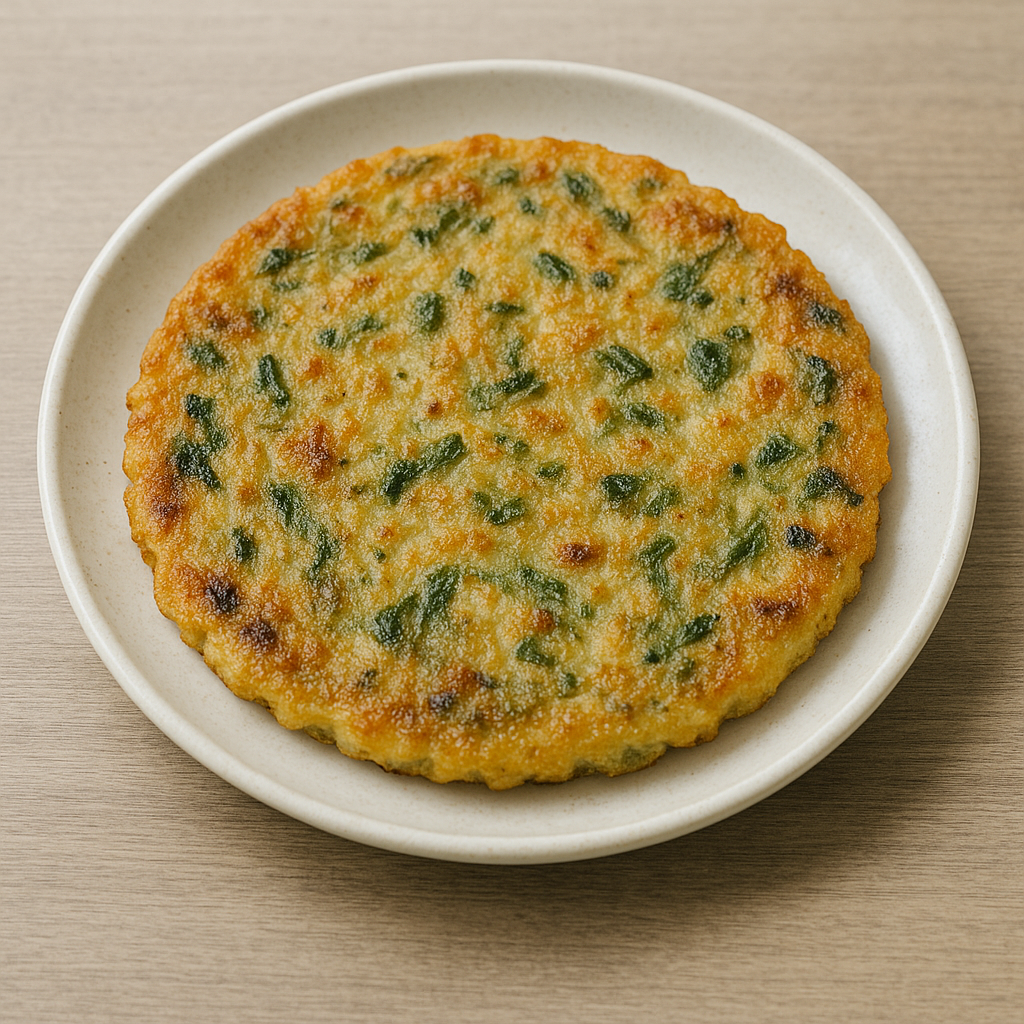
A Friendly Guide to Korean Jeon
Jeon is one of those Korean dishes that immediately feels warm and welcoming. Whether you spot it sizzling on a street cart or taste it at a family table, its golden edges and savory aroma draw you in. These Korean savory pancakes are simple, comforting, and endlessly customizable—perfect for anyone curious about everyday Korean flavors.
What Makes Jeon Special
Jeon transforms familiar ingredients into something deeply satisfying. With a bit of chopping, a quick batter, and a few minutes in the pan, you can make versions ranging from seafood-packed haemul pajeon to lightly browned zucchini slices. No matter the variation, jeon is loved for its balance of crispy edges and tender centers.
Common Ingredients
- Scallions or Korean green onions
- Mixed seafood such as shrimp, squid, or mussels
- Kimchi (a little juice adds extra color and depth)
- Mung beans soaked and ground for bindaetteok-style pancakes
- Zucchini, sweet potato, mushrooms, or thinly sliced fish
- Eggs for coating or mixing into the batter
- Flour or a flour–starch blend for a light texture
- Soy sauce, garlic, sesame oil, and chopped scallions for dipping sauce
- A touch of gochugaru or black pepper
How to Make Jeon at Home
- Prepare your main ingredients: slice scallions, chop kimchi, or clean seafood. For mung bean pancakes, blend soaked mung beans with a little water until thick.
- Make the batter by mixing flour with water until smooth and pourable. Add an egg for a richer texture if you like.
- Fold your ingredients into the batter so they are evenly coated.
- Heat a pan with a thin layer of oil over medium heat.
- Spoon or pour the mixture into the pan and gently flatten it.
- Cook until the bottom turns golden and crisp, then flip and brown the other side.
- Remove, rest briefly, and cut into bite-sized pieces.
- Serve with a simple dipping sauce of soy sauce, vinegar, sesame seeds, and scallions.
Tips, Variations, and Serving Ideas
- Add a spoonful of potato starch for extra crispiness.
- Mix chopped kimchi directly into the batter for more heat.
- For restaurant-style haemul pajeon, increase the shrimp and squid.
- Create a vegetarian version with zucchini, mushrooms, or perilla leaves.
- Serve alongside a few banchan dishes for an easy Korean-inspired meal.
- Reheat leftovers in a pan—they crisp up nicely for next-day snacking.
Why Jeon Appeals Worldwide
Jeon holds a special place in Korean food culture, appearing at markets, holidays, and casual family meals. It’s often made during Lunar New Year or Chuseok, but many Koreans also enjoy it on rainy days when the sound of sizzling batter feels comforting.
For people discovering Korean cuisine, jeon offers an approachable entry point. Its ingredients are familiar, yet the cooking style offers something new. Across Korea, countless variations—from classic bindaetteok in historic markets to colorful mixed platters in traditional restaurants—show just how flexible this dish can be. That flexibility is part of why it has gained popularity globally: it’s quick, delicious, and easy to make with whatever you have on hand.
Closing Thoughts
Jeon is comfort food in its simplest, most inviting form. Whether you stick to a classic seafood pancake or create your own mix of vegetables, it’s an easy way to bring a taste of Korea into your kitchen. Give it a try, share it with friends, and enjoy a dish loved across Korea and increasingly around the world.