
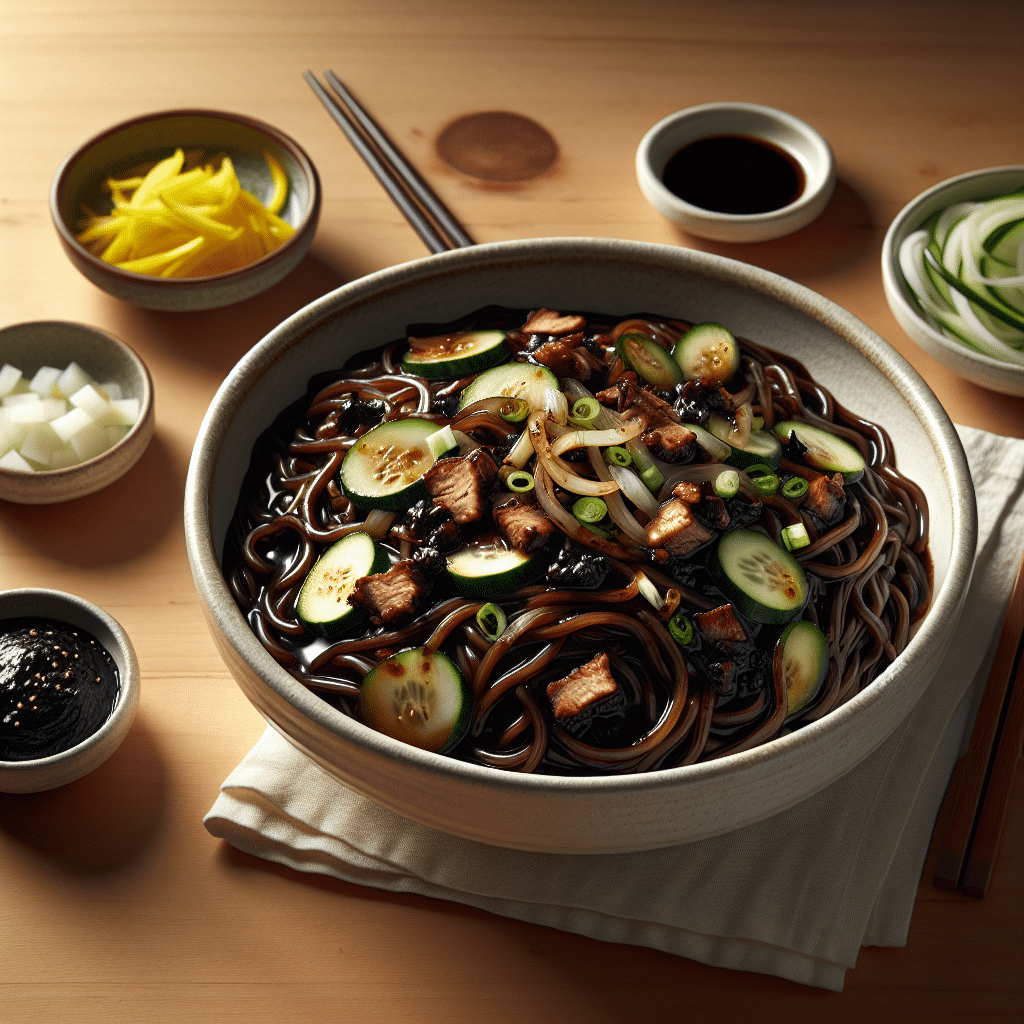
A Warm Introduction to Jajangmyeon
A steaming bowl of jajangmyeon has a way of stopping you in your tracks — glossy black bean sauce, thick chewy noodles, and a refreshing crunch of cucumber on top. Simple, comforting, and endlessly satisfying, it’s often one of the first Korean dishes people around the world fall in love with.
What Makes It Special
Jajangmyeon, sometimes called Korean black bean noodles, grew from Chinese zhajiangmian but evolved into something uniquely Korean — sweeter, heartier, and more saucy. It’s a favorite for busy weekdays, late-night delivery with friends, or relaxed family meals. The magic lies in the rich, savory‑sweet sauce that generously coats every noodle.
Core Ingredients
• Fresh wheat noodles or frozen Korean jjajangmyeon noodles
• Diced pork belly or pork shoulder (beef, chicken, or tofu work too)
• Korean chunjang (fermented black bean paste)
• Onion, zucchini, potato, and optional cabbage
• Minced garlic
• Sugar to balance the sauce
• Optional: oyster sauce, soy sauce, cornstarch slurry
• Neutral cooking oil
• Thinly sliced cucumber for topping
• Optional sides: danmuji (yellow pickled radish) and raw onion with extra black bean paste
How to Make Jajangmyeon at Home
- Dice the pork and vegetables into small, even cubes.
- Heat oil in a pan and stir-fry the pork until lightly browned.
- Add garlic and onions, cooking until the onions soften.
- Add the remaining vegetables and stir well.
- Push everything to one side of the pan, add a bit more oil, and briefly fry the black bean paste before mixing it in.
- Pour in water to create the sauce base and adjust the amount to your preferred thickness.
- Add sugar and optional seasonings like soy sauce or oyster sauce.
- Simmer until the vegetables are tender and the sauce becomes glossy and thick. Add a cornstarch slurry if needed.
- Cook the noodles in boiling water until chewy, then drain.
- Serve the noodles in a bowl and spoon the sauce generously on top. Add cucumber strips for freshness.
Tips, Variations, and Serving Ideas
• Use chicken or tofu for a lighter version.
• Add cabbage or mushrooms for extra sweetness and flavor.
• Top with a fried egg for extra comfort.
• Make gan-jajang (dry-style) by reducing the water for a thicker sauce.
• Always serve with danmuji for crunchy, sweet‑sour balance.
• Try jajangbap — the same sauce served over rice — for an easy variation.
Why the World Loves Jajangmyeon
Jajangmyeon is more than a dish; it’s a piece of everyday Korean life. Many Koreans grow up sharing it during celebrations, casual weekends, school events, and family deliveries. It’s both homestyle comfort food and a classic in Korean Chinese restaurants.
Its global rise has been fueled by dramas, food videos, and the growing popularity of Korean street food culture. It’s easy to understand, customizable for different palates, and simply fun to eat — a perfect entry point for newcomers exploring Korean cuisine.
A Bowl That Brings People Together
Warm, hearty, and deeply comforting, jajangmyeon captures the spirit of Korean home cooking: generous, flavorful, and meant to be shared. Whether you cook it for yourself on a quiet evening or prepare it for friends, this dish brings an inviting taste of Korea straight to your kitchen.
Craving more Korean flavors?
Explore more easy, comforting Korean dishes that you can cook at home:
- Korean fried chicken & beer (chimaek)
- Plant-based Korean cuisine ideas
- Vegan kimchi & fermented foods
Want to dive deeper into Korean food culture?
These trusted resources are a great place to start:
jajangmyeon-black-bean-noodles
Recommended Products
Recommended for you
- Korean chunjang paste – key ingredient for authentic jajangmyeon
- Korean jajangmyeon noodles – thick noodles perfect for the sauce
- Danmuji pickled radish – classic crunchy side for the dish
- Stir‑fry pan or wok – handy for frying the sauce and vegetables
As an Amazon Associate, I earn from qualifying purchases.