
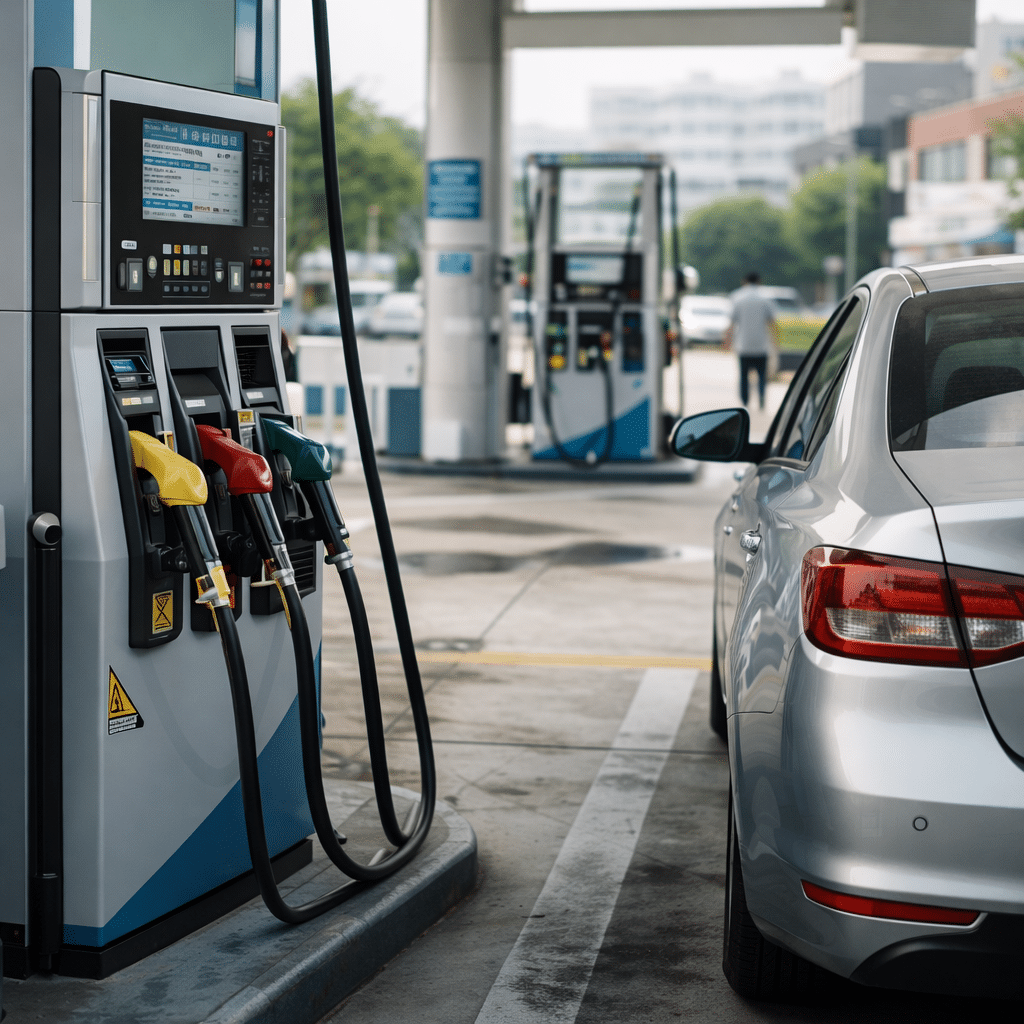
The Problem Foreign Drivers Often Face
You’re driving in Korea, the fuel light turns on, and you pull into a station. Then reality hits: the machine is in Korean only, the buttons look unfamiliar, and you’re not sure whether to stay in the car or step out.
If it’s a full‑service station, an attendant might approach and ask “휘발유? 경유?”—and you freeze because you’re not sure what to say. If it’s a self‑service station, the touchscreen may leave you wondering which button means gasoline, which means diesel, and which one lets you pay.
Using a gas station in Korea can feel intimidating if you don’t speak Korean, especially when the screen starts flashing unfamiliar buttons. The good news is that most Korean gas stations follow the same system nationwide. Once you understand where to park, how to select fuel, and when to pay, the process becomes predictable and stress-free. Many travelers are surprised to find that Korean gas stations are actually easier to use than expected—once the first visit is over.
Why This Happens
Korean gas stations assume quick, fast-paced interactions. Most drivers know their car, their payment method, and their routine—so stations rarely include English menus or extra instructions.
Common reasons:
- Self-service kiosks often have Korean-only interfaces.
- Full-service attendants expect a quick answer about fuel type.
- The workflow is designed for locals who refuel the same car every day.
What to Do: A Simple Step-by-Step Guide
Step 1: Identify the Type of Gas Station
Before you park, look for the word “셀프.”
- If you see it, it’s self-service, and you’ll pump the fuel yourself.
- If you don’t see it, it’s full-service, and the attendant will handle everything.
Choosing the right type immediately makes the process easier.
Step 2: Use the One Phrase You Need
When the attendant approaches, you only need to say one thing:
- “휘발유요” = gasoline
- “경유요” = diesel
Say it confidently. That’s all they need.
Not sure what your car uses? Check the sticker inside your fuel door—Korean cars always list the fuel type there.
Step 3: For Self-Service, Press Only These Buttons
At the machine, follow this simple path:
- Select your fuel type: “휘발유” = gasoline “경유” = diesel
- Choose your payment: “카드” = card
- Insert your card (chip first)
- Choose a preset amount if you’re unsure (e.g., 50,000원)
Pick up the nozzle when instructed, insert it firmly, and squeeze the handle. The machine will beep when it’s finished.
Step 4: Use Pointing When Words Fail
Pointing works perfectly in Korea:
- Point to the fuel cap to show what you need
- Point to your credit card
- Point to the amount you want
Staff are used to helping non-Korean speakers and will guide you smoothly.
Step 5: Stay in the Car at Full-Service Stations
During full-service:
- Stay in the driver’s seat
- The attendant handles everything—fuel cap, pump, payment return
- They may clean your windshield automatically
If asked “현금? 카드?” simply reply “카드요” and hand over your card.
What NOT to Do
Don’t Guess Your Fuel Type
Guessing can cause major vehicle damage, especially with rental cars. If unsure, check the sticker or point to the tank and ask “휘발유?”
Don’t Press Random Buttons on a Self Machine
Korean kiosks can be sensitive. Stick to the essentials: fuel type, payment, amount.
Don’t Block the Pump Area
Korean drivers refuel quickly. Park close to the pump and follow attendants’ gestures.
Quick Survival Tip
Take a photo of your car’s fuel-type sticker and keep it on your phone. Showing it is often the fastest, stress-free solution.
This post is now fully polished, structured, and ready for WordPress in Markdown format.

Ask Seoul Unnie
Still confused by Korean-only menus or everyday situations like this?
Ask Seoul Unnie — real, practical answers from someone living in Korea.
📘 Living in a Korean Home
This article is part of our Living in a Korean Home guide series for foreigners.
### Related Guides
Recommended for you
- Korea Travel Guide – helpful for driving and trip planning
- International Driving Permit Holder – keeps your travel documents organized
- Portable WiFi Hotspot – useful for navigation at gas stations
- Korean Travel Phrasebook – helps with simple Korean phrases
As an Amazon Associate, I earn from qualifying purchases.