Understanding Priority Seats on the Korean Subway
Riding the subway in Korea is usually quick and stress‑free, but one area often confuses newcomers: the bright-colored priority seating zone. Recognizing these seats helps you travel confidently and respectfully, especially during busy commute hours. This guide shows you what to look for, why these seats matter in Korean culture, and how to handle common situations with ease.
When This Tip Helps
Imagine stepping onto a crowded train, spotting an empty red seat, and wondering whether you’re allowed to sit there. Priority seats in Korea are clearly marked, but if you’re not familiar with the colors or symbols, it’s very easy to make an honest mistake. Understanding these cues helps you avoid awkward moments and feel more comfortable using public transportation.
Why Priority Seats Matter
In Korea, priority seating is taken seriously by both the subway system and everyday riders. These seats are reserved for people who need them most, including:
• Elderly passengers
• Pregnant riders
• People with disabilities
• Parents carrying infants
Even during rush hour, you’ll often see these seats left empty unless someone clearly in need is present. This reflects a cultural emphasis on caring for vulnerable members of the community. Sitting in these seats without belonging to one of the intended groups is generally viewed as disrespectful.
Many visitors sit in them accidentally because the bright colors stand out or look similar to regular seats they’ve seen in other countries. Learning how to spot priority zones helps you blend smoothly into daily life in Korea.
How to Navigate Priority Seating
Here are simple steps to help you avoid confusion:
Look for Bright Colors
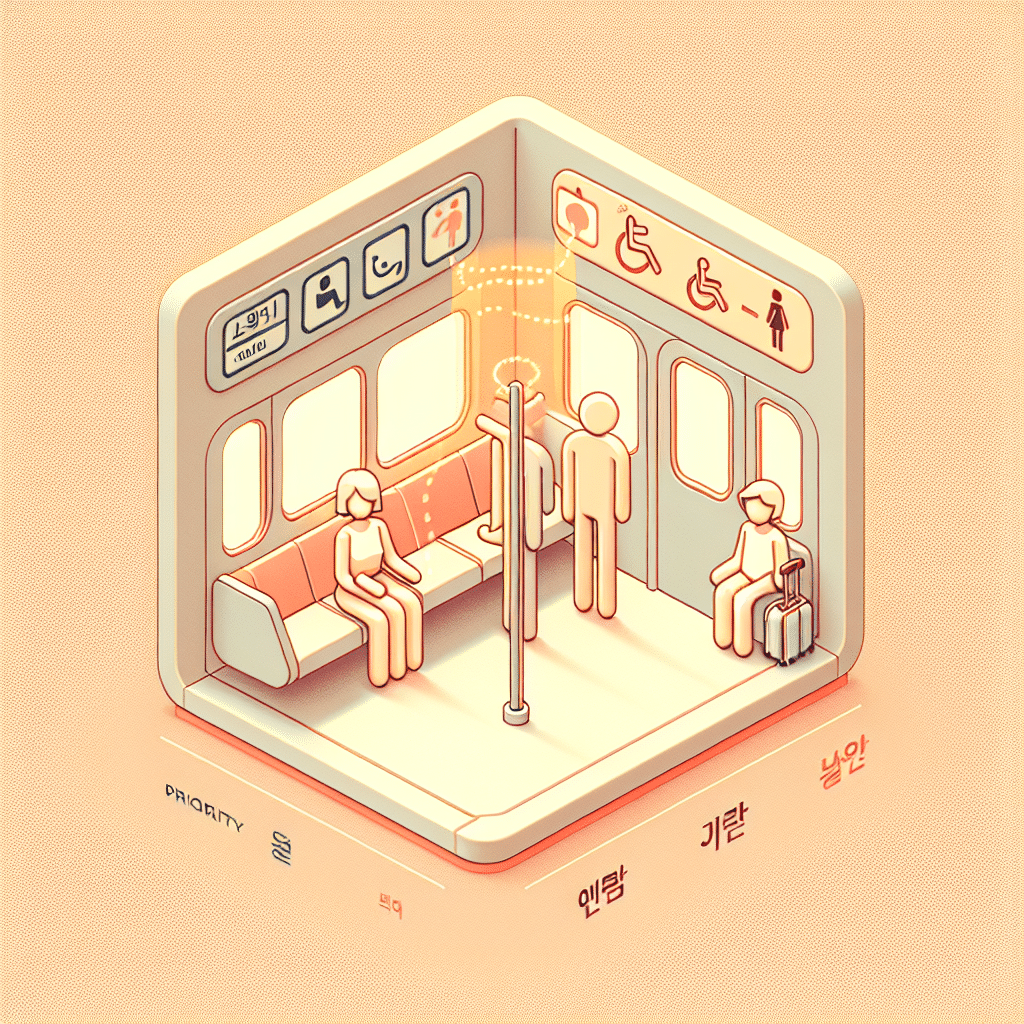
Most priority seats are red, coral, or warm pink, while regular seats tend to be blue or gray. A cluster of bright seats at the end of a row almost always indicates a priority area.
Check the Icons
You’ll usually see clear symbols above or on the seats showing who they’re for: a pregnant person, an elderly rider with a cane, someone with a cast, or a caregiver holding a baby.
Stand Nearby, Not Directly in Front
If the train is full, avoid blocking the seats. Stand slightly aside so people who need them can reach them easily.
If Someone Who Needs the Seat Appears, Move Immediately
Passengers usually stand up right away when a qualifying rider enters. Even if you’re unsure, offering the seat with a friendly gesture is always appropriate.
If You Sit There by Accident
No worries—simply stand up politely. A quick nod is enough to show you understand.
Keep Bags Out of the Area
Luggage, backpacks, and shopping bags shouldn’t block priority seats. Keeping the space open makes it easier for those who need it to sit.
Real Situations You May Encounter
Rush Hour on a Packed Train
All the blue seats are full, but a red one remains empty. That seat is reserved, so you stand instead.
Dialogue: “여기 앉으세요.” (Please sit here.)
A Pregnant Passenger Enters
Someone wearing the pink pregnancy badge gets on the train, and riders naturally look toward the priority zone.
Dialogue: “자리 비워드릴게요.” (I’ll make room for you.)
An Elderly Person Approaches
If an older rider walks toward the priority seats, step aside and give clear access.
Dialogue: “앉으세요.” (Please take this seat.)
Parent Holding a Baby
A caregiver carrying a sleeping infant boards. Passengers instinctively make space.
Dialogue: “여기요.” (Over here.)
A Rider With an Injury
Someone using crutches or wearing a cast enters. People gently signal toward the priority area.
Dialogue: “이쪽으로 오세요.” (Come this way.)
Extra Tips and Things to Watch For
• Seat colors may vary, but red or coral usually indicates a reserved zone.
• Avoid sitting there even if the train is nearly empty; the rule applies at all times.
• Keep large bags away from these sections.
• Some trains include special pregnancy-only seats with pink icons—treat them like regular priority seats.
• Local riders often avoid the seats out of habit, even late at night.
• Offering your seat, even without being asked, is always appreciated.
• These areas are generally kept quiet and calm.
• Priority seats are usually found at the ends of each seating row.
Why Travelers Appreciate This Tip
Understanding priority seats boosts your confidence and helps you connect with local etiquette. It’s one of the most helpful daily-life insights for anyone visiting or living in Korea. Once you know how to spot these seats, your subway rides feel smoother, more comfortable, and more culturally aware.
Final Thoughts
The Korean subway is one of the most convenient ways to get around, and recognizing priority seats makes the experience even better. The next time you ride, try scanning for the bright colors and icons—they’re easy to spot once you know what to look for. With this simple tip, you’ll travel more confidently and blend naturally into everyday Korean life.
Need helpful tips for life in Korea?
These essential guides will make your daily life easier:
- Understanding Korea’s Jeonse & Wolse Housing Deposit System
- Why Koreans Use Two Hands When Giving or Receiving Items
Recommended for you
- South Korea travel guide – helpful for planning subway routes
- Korean phrasebook – useful for reading subway signs
- RFID card holder – keeps your transit card easy to access
- Portable travel charger – helps keep your phone ready for navigation
As an Amazon Associate, I earn from qualifying purchases.