
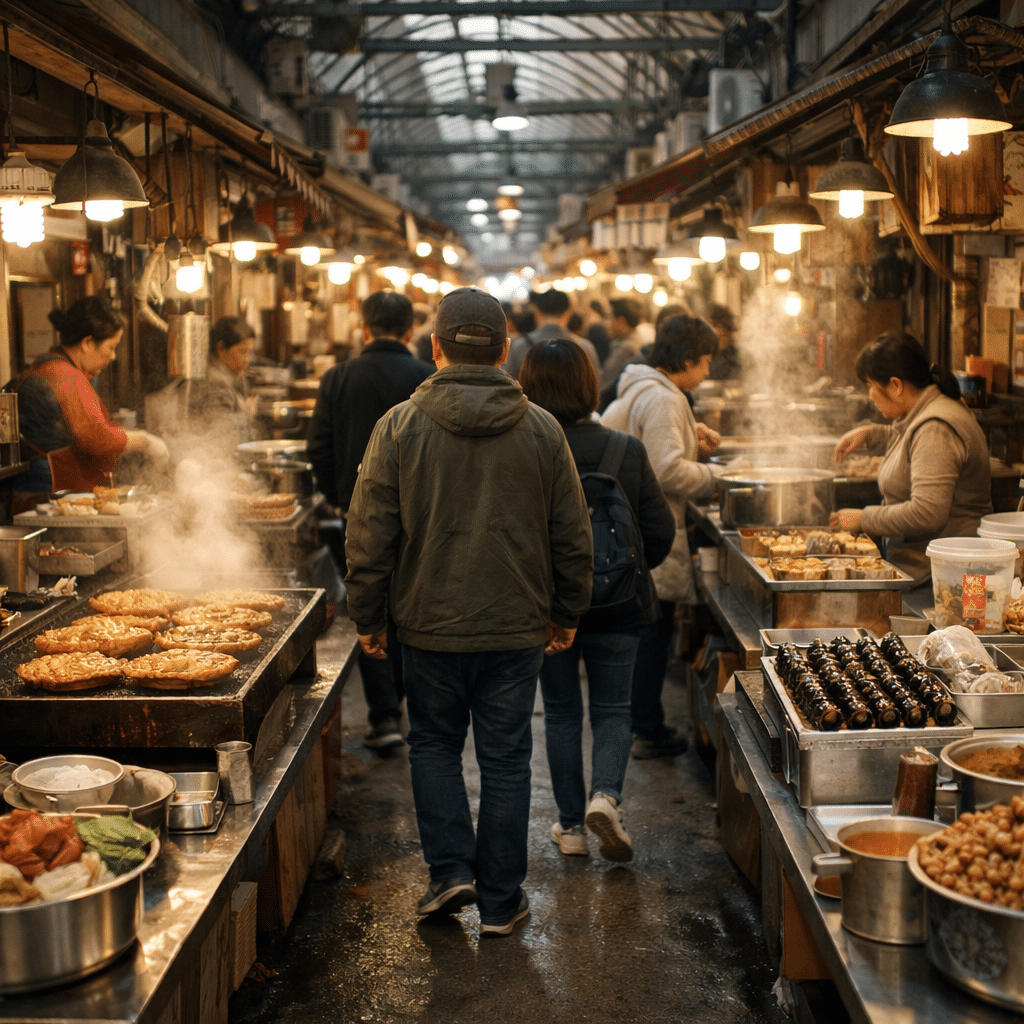
Introduction: Step Into the Streets
Walking through Gwangjang Market isn’t just about food — it’s about rhythm.
Steam rises from bindaetteok stalls, vendors call out in warm Seoul dialects,
and every narrow lane opens into a new sensory scene.
This guide follows a natural walking flow locals actually use,
so you don’t just visit the market — you move with it.
This slow walk through Gwangjang Market reflects how locals experience food and streets one alley at a time.
→ Travel in Korea: Walks, Views, and Local Experiences
The Walking Routes You’ll Love
The market path starts narrow, winding between stalls overflowing with bright tangerines and glossy red peppers. Under the morning sun, the colors look almost unreal. You naturally slow your pace—partly to enjoy the view, partly because elderly ladies glide ahead with calm certainty, steering tiny two‑wheeled carts like gentle ships.
As the day warms, the scents shift. Morning herbs and fresh greens give way to sizzling oil and sweet soy. Hotteok presses on a griddle, fish cakes bob in broth, and fritters crackle in boiling oil. A vendor offers a tiny piece of twigim with a proud nod. These small exchanges are part of the ritual.
Deeper inside, the atmosphere grows louder and livelier. A butcher cleaves meat with rhythmic confidence, a flower seller spritzes her blooms so the droplets sparkle, and middle schoolers weave through the aisles with pockets full of snacks. Every few steps, a new scene unfolds.
Eventually, the market spills into a quieter alley. Small hanok‑style storefronts appear, their wooden beams and low roofs softening the ambience. Artisans sharpen knives, repair pots, or sell grains from giant sacks. These corners feel timeless—simple, grounded, and deeply rooted in the past.
Best Photo Spots (and the Story Behind Them)
Red Umbrella Seafood Aisle
One of the most atmospheric scenes hides beneath a row of red umbrellas stretched above the seafood section. Late‑morning sunlight filters through, turning the whole aisle into a glowing tunnel. Crouch slightly to capture both the umbrellas and the lively movement below—shimmering water on the pavement, fish being prepared, people leaning in to choose the day’s catch.
The Steaming Tteok Stall
A tiny alley houses a tteok stall that has been run by the same family for generations. Colorful rice cakes line the counter, but the real magic appears behind the grandmother who works there. On cool days, steam rises in soft clouds, creating a dreamy backdrop. Stand at a slight angle to capture her hands in motion framed by the warm haze.
Grain Merchant Corner
Near the grain sellers, burlap sacks create rich, earthy textures. In the afternoon, shadows deepen and the sacks glow like warm sand. You’ll often catch a quiet moment when a vendor pauses with a scoop in hand—simple but full of character.
Local Tips You Won’t Find in a Brochure
- Follow the ajummas. If locals gather around a particular stall, something good is happening there.
- Try small tastes. It’s common to order just one skewer or dumpling before deciding. Vendors expect it and often enjoy chatting.
- Look down as well as around. Chalk signs, worn tiles, and puddles reflecting neon lights in the evening add unexpected charm.
Traditional markets aren’t polished—and that’s exactly their beauty.
What to Bring, What to Expect
Wear comfortable shoes. The ground can be uneven, and you’ll stop often simply because something catches your eye.
Expect friendly, human‑paced crowds. People pause, chat, taste, and take their time.
Bring a small bag for snacks or souvenirs. Vendors rarely provide large bags, and it’s easier to explore with your hands free.
And don’t worry about language. A smile and a bit of curiosity go a long way.
Why This Walk Matters
A walk through a Korean traditional market is more than a visit—it’s a glimpse into daily life. You’ll see grandmothers bargaining, children tugging at sleeves, vendors calling out familiar greetings, and broth drifting through narrow aisles.
This walk teaches gentle patience. It shows that travel isn’t always about grand monuments; sometimes the clearest understanding of a place appears in everyday scenes shared openly with strangers.
Suggested Walking Itineraries
Half‑Day Walk (Relaxed Pace)
Start at the main market entrance lined with fruit and vegetable stalls. Wander toward the food alley, stopping whenever a scent draws you in. Continue to the seafood section under the red umbrellas—perfect for atmosphere and photos.
Move into the quieter hanok‑style artisan alley, browsing the metalwork and household shops. End at the tteok stall with its steaming baskets for a warm, peaceful finish.
Perfect for travelers with limited time or anyone who enjoys slow, gentle exploration.
Full‑Day Walk (Slow Travel Style)
Begin at the entrance to enjoy the fresh morning energy. After exploring the produce stalls, warm up with a small snack from a food vendor.
Walk toward the red‑umbrella seafood aisle for beautiful morning light. Continue deeper until you reach the grain merchants, absorbing the textures and afternoon shadows. Nearby cafés offer simple tea or dessert—a quiet break worth taking.
In the afternoon, revisit your favorite alleys or drift into the fabric and household goods sections. End your day at the tteok stall, where the late‑day steam softens the atmosphere into a nostalgic glow.
Ideal for photographers, solo wanderers, and couples who love unhurried discovery.
Save This Walk on Google Maps
If you want to revisit this route later, you can easily turn it into a saved Google Maps list.
How to Create Your Own Map List
- Open Google Maps on your phone or browser.
- Search for each place listed below.
- Tap Save and add them to a new list.
- Give the list a simple, memorable name.
Places to Add to Your Map
- Market Main Entrance
- Fruit and Vegetable Aisle
- Seafood Section with Red Umbrellas
- Hanok‑Style Artisan Alley
- Grain Merchant Corner
- Tteok Stall with Steaming Baskets
- Nearby Café for a Mid‑Day Break
Once saved, your list becomes a personal walking guide—follow it at your own pace and explore freely.

Ask Seoul Unnie
Still confused by Korean-only menus or everyday situations like this?
Ask Seoul Unnie — real, practical answers from someone living in Korea.
✈️ Travel in Korea
This article is part of our Travel in Korea guide series, where we share walking routes, night views, local neighborhoods, and everyday travel experiences across Korea.
### Related Guides
Recommended for you
- Comfortable walking shoes – helpful for long market strolls
- Reusable travel shopping bag – handy for snacks and small finds
- Mirrorless travel camera – great for market photo spots
- Korean street food cookbook – brings market flavors to your kitchen
As an Amazon Associate, I earn from qualifying purchases.