
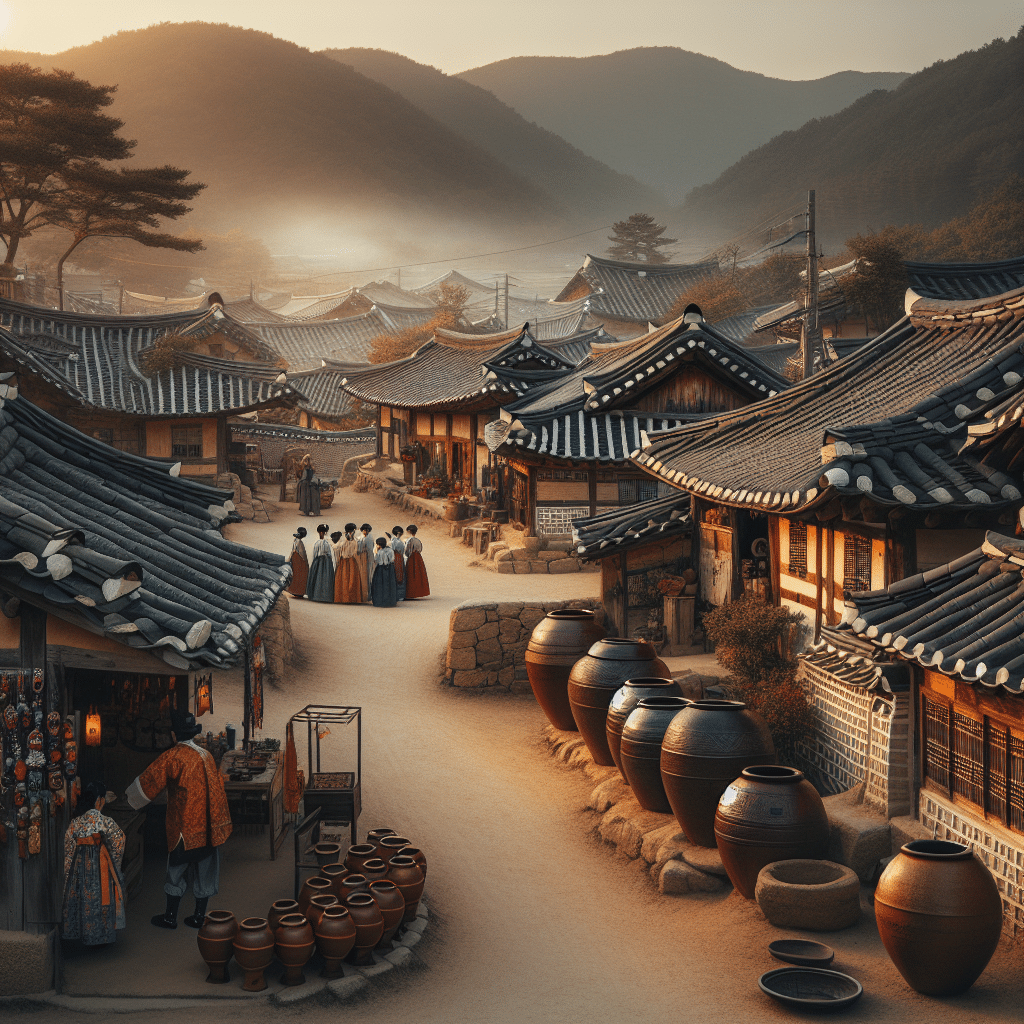
Discovering Andong Hahoe Folk Village
Late-afternoon light settles over Andong Hahoe Folk Village, turning earthen walls golden and casting long shadows across its narrow dirt lanes. This quiet, timeless place has become a global favorite for travelers seeking authentic cultural experiences beyond the usual pop‑culture routes. Here, traditional life, mask craftsmanship, and ancestral heritage come together in a setting that feels both cinematic and deeply rooted.
Why Hahoe Is Gaining Global Attention
Interest in Andong Hahoe Folk Village has surged thanks to cultural travel videos, festival coverage, and a growing fascination with Korea’s traditional heritage. Social media platforms now overflow with scenes of:
- Hanok rooftops glowing during golden hour
- Dancers performing in iconic Hahoe masks
- Peaceful snapshots of village life preserved for centuries
Its UNESCO World Heritage designation continues to draw visitors, but the latest wave reflects something broader: international fans who discovered Korea through modern entertainment now seeking deeper historical and cultural layers. Recent travel creators have highlighted mask dance performances, scenic walks, and artisan workshops—leading to a sharp rise in global searches for “traditional Korea experiences.”
The annual Andong Mask Dance Festival has also helped introduce thousands of new visitors to Korea’s folk storytelling traditions, making Hahoe an increasingly prominent cultural landmark.
The People Behind the Village
Hahoe is not a staged attraction—it is a living community. Descendants of the Ryu clan, who settled here during the Joseon Dynasty, still call the village home. Their traditions and homes form the backbone of its cultural landscape.
Key contributors include:
- Artisans carving Hahoe masks from single blocks of wood
- Mask dance performers preserving the Hahoe Byeolsingut Talnori tradition
- Residents maintaining centuries-old hanok houses, many used as homes or guest stays
- Preservation groups and UNESCO coordinators ensuring long-term protection
For global visitors, walking through these lanes feels like entering a real-life version of historical scenes often seen in Korean dramas—except everything here is authentic.
Highlights and Recent Appeal
- UNESCO Recognition: Awarded in 2010 for its preserved Confucian cultural landscape and traditional architecture.
- Viral Mask Dance Moments: Short clips of expressive wooden masks and energetic performances have spread across social platforms.
- Mask Dance Festival: An annual gathering that brings global performers and cultural exchanges to Andong.
- Golden Hour Photography: Soft afternoon light has inspired many of the village’s most popular travel images.
- Scenic Walking Routes: Clear paths lead through hanok clusters, pine forests, riverside viewpoints, and artisan workshops.
- Royal Visit: Queen Elizabeth II’s 1999 visit gave the village early international recognition.
- Hands‑On Workshops: Mask painting and folk craft sessions are now popular additions to travel itineraries.
These elements make Hahoe both historically significant and visually captivating—ideal for travelers seeking meaningful cultural immersion.
Why This Matters to a Global Audience
Hahoe offers a rare window into Korea’s deeper cultural identity. As global interest in Korean entertainment grows, many visitors now look for experiences that connect them to the country’s traditions, craftsmanship, and storytelling roots.
The mask dances reveal Korean humor, satire, and community spirit long before modern entertainment took center stage. Meanwhile, the village’s preserved architecture and natural surroundings support a rising trend in cultural travel—slower, more authentic journeys that highlight daily life rather than recreated sets.
Because Hahoe remains a functioning village, not a reconstruction, it appeals strongly to visitors searching for genuine heritage experiences.
How Visitors Are Responding
Online reactions from international travelers are overwhelmingly positive. Common themes include:
- Surprise at the village’s peaceful atmosphere
- Admiration for the mask dances and their expressive humor
- Comparisons to walking through a living museum
- Appreciation for simple daily scenes—wood stoves, quiet courtyards, drifting smoke
- Relief at how easy the village is to explore, thanks to clear English signage and guided tours
Many describe their visit as unexpectedly moving, offering a calm, reflective break from Korea’s fast-paced urban attractions.
Where to Watch, Visit, or Learn More
- The Hahoe Mask Dance takes place at the village’s outdoor theater with regular performances.
- Cultural programs and documentaries featuring Andong can be found on major streaming platforms.
- Travel creators share photography tours and cultural insights on YouTube.
- On-site workshops offer mask painting and other folk crafts, often with English support.
- Although not a frequent drama filming location, the architecture will feel familiar to fans of historical series.
Closing
A walk through Andong Hahoe Folk Village reveals a side of Korea shaped by centuries of tradition—one where architectural beauty, ritual, and community life remain vivid. Whether you’re drawn by the expressive masks, the golden glow of hanok rooftops at sunset, or the gentle rhythm of village streets, Hahoe offers a meaningful glimpse into Korea’s deeper story.
Stay tuned for more features as we continue exploring the places, people, and traditions shaping today’s Korean cultural landscape.
Planning your Korea trip?
These travel guides will help you explore like a local:
Recommended for you
- Korean Traditional Culture Book – great for learning village history
- Korean Mask Wall Decor – inspired by Hahoe mask traditions
- South Korea Travel Guide – helpful for planning an Andong trip
- Universal Travel Adapter – useful for travelers in Korean villages
As an Amazon Associate, I earn from qualifying purchases.