
A Warm Night at Gwangalli Beach: Why Busan’s Eomuk Skewers Are Trending
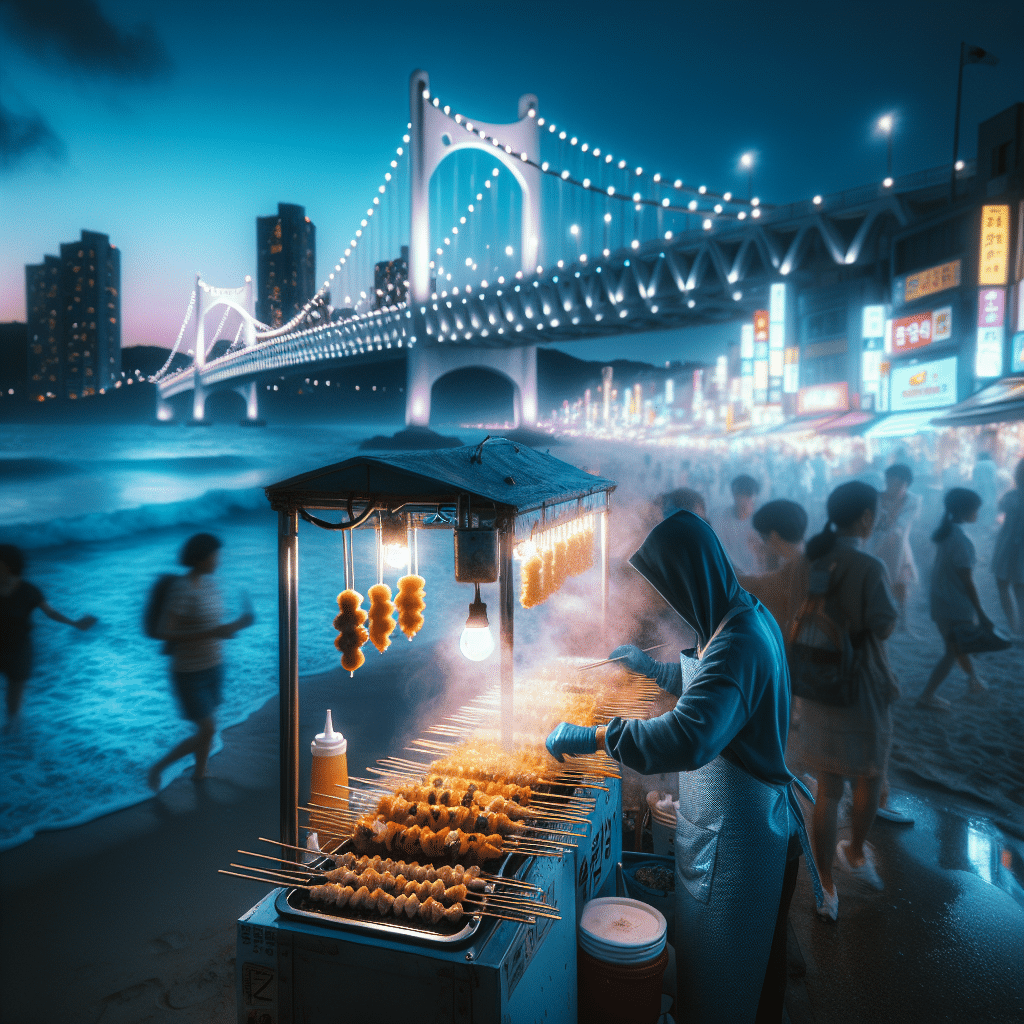
A soft evening breeze moves across Busan’s Gwangalli Beach, carrying the comforting scent of simmering broth and freshly made fish cakes. As the lights of Gwangan Bridge brighten over the water, one street‑food favorite draws both locals and travelers: eomuk skewers. This piece explores why this humble comfort food has become a must‑try part of everyday Korean culture.
Why Eomuk Is Having a Moment
Gwangalli Beach has always been admired for its blend of cityscape and shoreline, but recently its food stalls have taken center stage. Short-form creators and travel vloggers are showcasing winter night markets, beachside snacks, and especially trays of steaming Busan-style eomuk. Their videos often highlight the atmospheric “blue hour” glow—cobalt sky, bridge lights, and rising steam that gathers around people holding wooden skewers.
Eomuk has also regained popularity through dramas and travel shows, where characters often enjoy hot fish cakes on cold nights. Because modern Korean fish cakes originated in Busan, many visitors see the city as the best place to taste authentic versions. With Busan positioning itself as a cultural and tourism hub, Gwangalli’s street food naturally stands in the spotlight.
The People Behind the Flavor
This story focuses not on celebrities but on the vendors, family-run stalls, and small producers who define Korea’s street‑food scene. Many Gwangalli stalls have served both locals and curious travelers for years.
What sets Busan-style eomuk apart?
- A higher ratio of fish to flour, giving a firmer bite and richer flavor
- Broth simmered with radish, kelp, and anchovy
- Warm skewers served with small cups of broth—especially comforting on cool seaside evenings
For newcomers to Korean cuisine, eomuk (also known as odeng) is a nationwide staple found in markets, convenience stores, and winter street stalls. Busan’s coastal background and long fish‑processing tradition give its version a cleaner, deeper taste that locals love.
Highlights and Key Moments
Several factors explain why Gwangalli’s eomuk stalls are gaining global attention:
- Viral travel clips capturing slow‑rising steam against the glowing bridge
- Frequent appearances in K-dramas and reality shows set in Busan
- Peak seasonal crowds during winter and early spring
- Flavor variations such as cheese‑filled or spicy skewers
- Affordable, easy-to-try street food for international visitors
- A photogenic setting that has become one of Busan’s signature night views
Why It Matters to Global Fans
The surge of interest in Busan’s eomuk reflects a broader curiosity about everyday Korean life. Beyond stages and drama sets, simple moments—like enjoying hot street food—help viewers understand the environments behind their favorite cultural content.
Gwangalli Beach has become especially recognizable thanks to its bridge lighting and relaxed coastal atmosphere. Many travelers see it as a place where scenic beauty meets modern urban Korea.
Major concerts and cultural events in Busan have also encouraged fans to explore the city beyond Seoul. Street food offers an easy way to experience the real pace of local life: office workers grabbing quick snacks, couples walking by the water, and tourists finally tasting dishes they’ve only seen online.
How Fans Are Reacting
Travel threads and social posts are filled with first impressions:
- “It tastes so much fresher than what I tried in Seoul!”
- “The view of Gwangan Bridge plus hot fish cake? Perfect combo.”
- “I saw this in a drama and finally tried it—so good.”
Nighttime photos—steam rising, bridge lights in soft bokeh—have become a favorite aesthetic among K-culture enthusiasts. Hashtags for Gwangalli Beach, Busan food tours, and “night eomuk” appear frequently on foodie and travel accounts, spreading interest across borders.
Where to Explore More
Before visiting, travelers can experience Busan’s street‑food atmosphere through:
- Travel vloggers who film nighttime walks along Gwangalli Beach
- Korean lifestyle creators featuring Busan dishes like eomuk, tteokbokki, and hotteok
- TV travel programs showcasing Busan’s markets and food culture
- K-dramas filmed near the beachfront and promenade
Visitors can enjoy eomuk at many stalls along the beach, most staying open late into the evening. Local markets also sell packaged Busan-style fish cakes for those wanting to bring a taste of the city home.
A Warm Goodbye from Gwangalli
Whether you’re a seasoned traveler or discovering Korean culture for the first time, Gwangalli Beach offers a welcoming mix of scenery, flavor, and gentle nightlife. With the glow of Gwangan Bridge above and a hot skewer in hand, it’s easy to see why Busan’s eomuk has captured attention worldwide.
More stories on Korean food, culture, and trends are on the way—stay tuned.
Planning your next trip in Korea?
Explore these popular travel guides loved by international visitors:
- Guide to Korea’s Shopping Districts & K-Beauty Experience
- Visiting Seoul’s K-pop District & SMTOWN COEX Artium
Recommended for you
- Busan‑style fish cake packets – bring home the flavor of eomuk
- Korean street food cookbook – learn dishes like eomuk and tteokbokki
- Korean hot pot broth base – make warm soup for skewers at home
- Busan travel guidebook – plan a visit to Gwangalli Beach
As an Amazon Associate, I earn from qualifying purchases.