
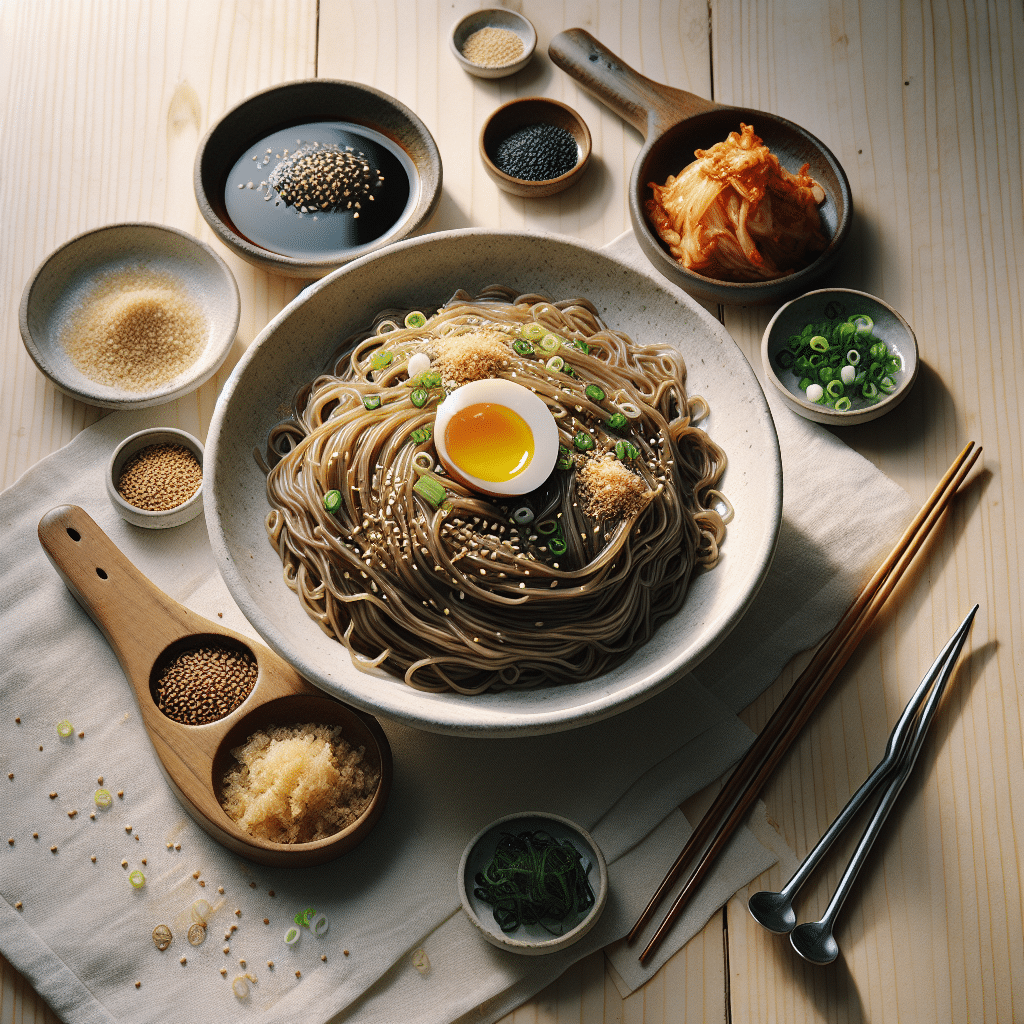
Korean Perilla Oil Noodles: Simple, Comforting, and Full of Heart
A bowl of Korean perilla oil noodles may look modest, but its flavor carries real depth. Nutty, aromatic, and soothing, this dish captures the warmth of Korean home cooking in the simplest way. If you enjoy quick meals with character, deulgireum makguksu is a wonderful place to begin.
What Makes This Dish Special
Core ingredients: buckwheat noodles, perilla oil, soy sauce, green onions, sesame seeds, roasted seaweed, and an optional egg.
Korean perilla oil noodles shine because they turn a handful of everyday ingredients into something deeply aromatic. Buckwheat noodles offer a gentle chew, while perilla oil adds an earthy, herbal nuttiness that sets it apart from sesame oil. Soy sauce brings balance, and green onions and roasted seaweed add freshness and texture. Many people mix in an egg yolk or a soft-boiled egg for a creamier, more comforting finish.
This dish feels like something enjoyed at a countryside table or in a bright city kitchen on a slow weekend. Humble ingredients, satisfying flavors—an ideal example of modern Korean simplicity.
Ingredients
- Buckwheat noodles (soba-style or Korean makguksu)
- Perilla oil, preferably toasted
- Korean-style soy sauce or a mild all‑purpose soy sauce
- Optional egg yolk, soft‑boiled egg, or seasoned egg
- Finely sliced green onions
- Roasted seaweed flakes (gim)
- Toasted sesame seeds
- Optional additions: minced garlic, salt, sugar, vinegar, chili flakes, or a pinch of gochugaru
- Optional sides: kimchi, pickled radish, or other banchan
How to Make It at Home
- Cook the buckwheat noodles until soft but slightly chewy. Buckwheat cooks fast, so check often.
- Drain and rinse under cold water to remove excess starch.
- Shake off all remaining water; the noodles should be cool and not wet.
- Place the noodles in a wide bowl.
- Drizzle with perilla oil and add soy sauce to taste.
- Toss gently until the noodles are evenly coated.
- Add green onions, sesame seeds, and crushed roasted seaweed. Toss again.
- Top with a raw egg yolk or soft‑boiled egg if you want extra richness.
- Adjust the flavor: a pinch of sugar for smoothness, vinegar for brightness, or chili flakes for heat.
- Serve with kimchi or other small Korean side dishes.
Tips, Variations, and Serving Ideas
- Warm the perilla oil slightly before using, but avoid overheating.
- Use fresh, high‑quality perilla oil for the best aroma.
- Add gochugaru or chili oil if you like spice.
- Add sliced cucumber or shredded cabbage for crunch.
- Try other noodles such as wheat or glass noodles for a different twist.
- For summer, keep the noodles extra cold and add a splash of vinegar.
- For winter, keep the noodles at room temperature and add soft‑boiled eggs.
- Pair with grilled meats or Korean street‑food snacks.
- Add garlic sparingly, as it can overpower perilla oil.
Why It’s Loved Around the World
Deulgireum makguksu is gaining global attention because it aligns perfectly with modern food preferences: clean flavors, simple steps, and wholesome ingredients. Buckwheat noodles appeal to those seeking lighter or gluten‑aware options, and perilla oil introduces a memorable aroma that feels both comforting and new.
As people explore Korean cuisine beyond barbecue and spicy classics, this dish reveals a quieter, gentler side of Korean cooking—the kind found in everyday homes. Its balance of novelty and familiarity makes it appealing to travelers, beginners, and food lovers everywhere.
The growing availability of perilla oil and other Korean pantry items has also helped this dish reach international kitchens. It is easy to adapt for different diets and looks naturally beautiful when served, matching global dining aesthetics that value clean, honest presentation.
A Warm, Inviting Closing
Korean perilla oil noodles prove that the simplest dishes can be the most satisfying. With just a few ingredients and a few minutes, you can bring a taste of Korean comfort into your home. Whether for a quick lunch, a peaceful weekend meal, or a refreshing bowl on a hot day, this dish offers an easy and heartfelt introduction to the flavors that make Korean food beloved worldwide.
Enjoy experimenting and finding your own perfect version.
Want to explore more delicious Korean flavors?
Check out these popular dishes you’ll love:
Recommended for you
- Korean perilla oil – key ingredient for these noodles
- Makguksu buckwheat noodles – traditional noodles for this dish
- Korean noodle bowls – good for serving cold noodles
- Korean home cooking cookbook – more simple noodle and sauce ideas
As an Amazon Associate, I earn from qualifying purchases.