
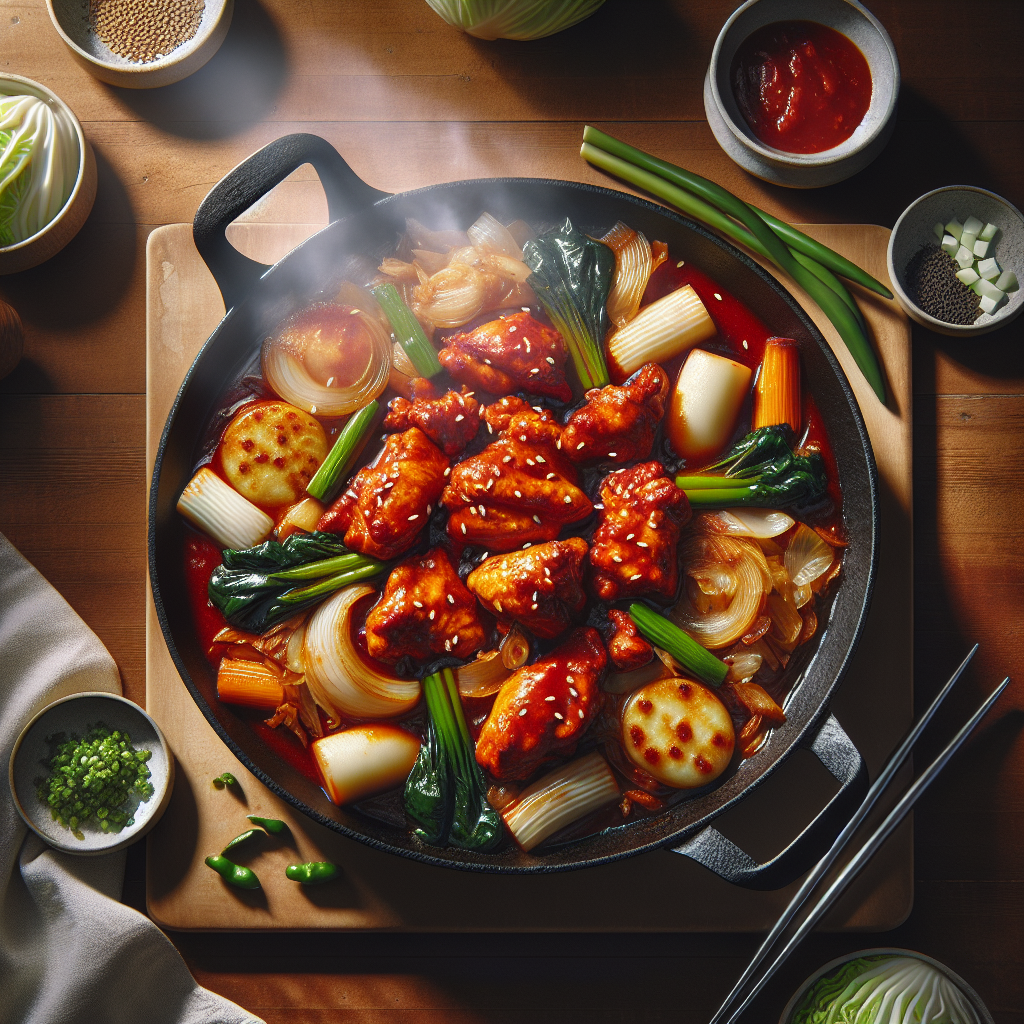
Dak Galbi: A Sizzling Favorite from Korea
Dak galbi is a dish that announces itself before it even reaches your table. The bright red sauce, the sound of sizzling, and the rising steam promise something bold, comforting, and deeply satisfying. For many visitors to Korea, this stir‑fried chicken dish becomes an instant favorite.
What Makes Dak Galbi Special
Dak galbi brings together heat, sweetness, and hearty textures in a single pan. As the chicken and rice cakes caramelize in a spicy‑sweet gochujang sauce, every bite delivers a mix of tenderness, chew, and smoky edges. Originally from Chuncheon, a city famous for its chicken dishes, dak galbi is now enjoyed across Korea—from countryside markets to lively student neighborhoods.
Key Ingredients
- Boneless chicken thigh or breast
- Softened Korean rice cakes (tteok)
- Gochujang with a little gochugaru for deeper heat
- Sliced cabbage, onion, and sweet potato
- Garlic, soy sauce, and a touch of sugar or honey
- Perilla leaves, green onions, or sesame seeds
- Optional additions: mushrooms, carrots, cheese, ramen noodles
- Neutral oil for stir-frying
How to Make Dak Galbi at Home
- Mix gochujang, a little soy sauce, minced garlic, gochugaru, and sugar or honey to create a simple marinade. Coat the chicken and let it rest briefly.
- Heat a wide pan or cast‑iron skillet with a thin layer of oil. Add sweet potato slices first so they soften properly.
- Add the marinated chicken and stir‑fry over medium heat until the sauce thickens and clings to the meat.
- Add cabbage, onion, and softened rice cakes. Keep stirring so everything cooks evenly and develops light browning.
- If the pan becomes too dry, add a splash of water to loosen the sauce.
- Once everything is cooked through and glossy, stir in perilla leaves or green onions.
- Serve hot—ideally straight from the pan—with steamed rice or lettuce leaves for wrapping.
Tips, Variations, and Serving Ideas
- Add shredded mozzarella near the end for a popular cheesy version.
- Swap chicken for hearty vegetables to make a lighter or vegetarian-friendly style.
- Add a little water or broth for a saucier finish.
- Pair with simple banchan and side dishes to balance the spice.
- Add Korean green chili slices for extra crunch and heat.
- Stir in ramen noodles near the end for a fuller, more indulgent meal.
Why People Love It Worldwide
Dak galbi fits perfectly into the global enthusiasm for Korean street food and home cooking. It uses the iconic red chili sauce found in many Korean dishes yet stays approachable for beginners. With everything cooked in one pan, it feels social and interactive—just like the dining experience in Korean restaurants.
The flavor profile is layered but not complicated: spicy, sweet, savory, smoky. For many travelers, dak galbi becomes a gateway to Korean cuisine. It feels familiar enough to be comforting while introducing uniquely Korean ingredients like gochujang, rice cakes, and perilla leaves.
A Warm, Joyful Dish Worth Bringing Home
A steaming skillet of dak galbi is warm, a little messy, and joyful in all the right ways. Making it at home lets you taste not just the heat and sweetness but also the lively spirit behind the dish. With a few simple ingredients and one open pan, you can bring a piece of Korea’s comfort‑food tradition straight into your own kitchen.
Craving more Korean flavors?
Explore more easy, comforting Korean dishes that you can cook at home:
- Korean fried chicken & beer (chimaek)
- Plant-based Korean cuisine ideas
- Vegan kimchi & fermented foods
Want to dive deeper into Korean food culture?
These trusted resources are a great place to start: