
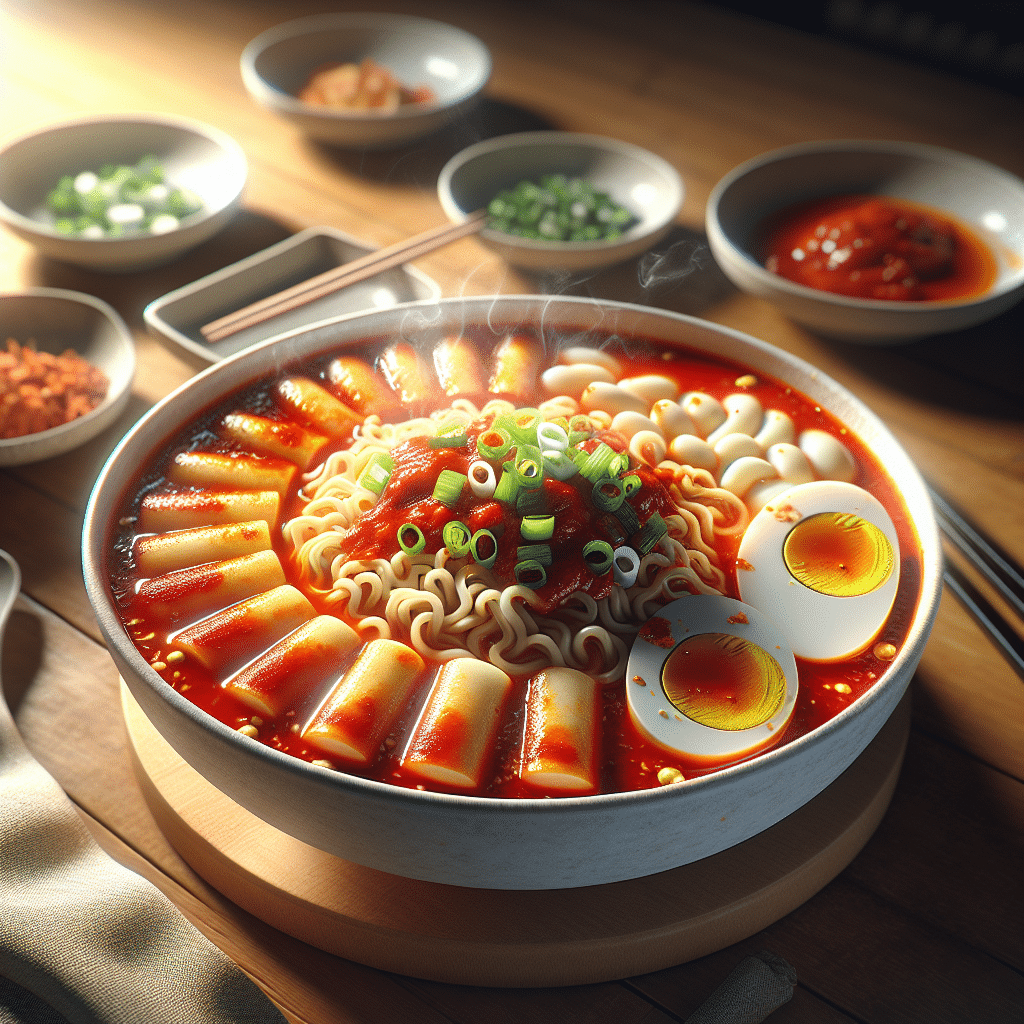
🎧 Easy Rabokki Recipe: How Koreans Make Ramen Tteokbokki at Home ASMR Version:
A Comforting Korean Snack
Rabokki is the kind of food Koreans reach for when hunger appears but a full meal feels unnecessary. It fits busy evenings, after‑school cravings, and slow weekends at home. Warm, fast, and familiar, it blends ramen and tteokbokki into a nostalgic bowl that tastes like late‑night convenience‑store visits and quick pots our parents made when they wanted something simple but satisfying. It’s practical, cozy home cooking—not restaurant food.
This popular street food is part of our wider look at everyday Korean meals and snacks.
→ Korean Food: Home Cooking, Street Food, and Food Culture
How It’s Really Made at Home
No one measures when making rabokki. A handful of rice cakes, half a ramen brick, a spoonful of gochujang, a splash of soy sauce. Water is judged by eye. The heat stays high because snacks like this are meant to cook fast. The goal is straightforward: chewy rice cakes, springy noodles, and a glossy red sauce. If it looks right, it’s right.
Ingredients
Main Ingredients
- Tteokbokki rice cakes
- Instant ramen noodles
- Green onion
- Fish cakes (optional but common)
- Water
Sauce Ingredients
- Gochujang
- Gochugaru (optional for extra heat)
- Soy sauce
- Sugar
- Garlic (minced or sliced)
Cooking Steps
Step 1: Build the Broth
Add water, gochujang, soy sauce, sugar, and garlic to a pot. Heat over medium‑high and stir until the gochujang dissolves. Once it starts bubbling, continue to the next step.
Step 2: Add Rice Cakes and Fish Cakes
Add the tteok and fish cakes. Keep the heat strong so the rice cakes soften evenly. Simmer until they become glossy.
Step 3: Add Ramen and Green Onion
Place the ramen block and a handful of green onion into the pot. Remove from heat as soon as the noodles loosen. The sauce will thicken slightly as it cools.
Step 4: Adjust the Texture
If the sauce feels too thick, add a small splash of water. If too thin, let it boil a bit longer. Adjust by eye—just like it’s done at home.
Korean Cooking Tips
- Add the ramen later than you expect; it cooks quickly and tastes best when still bouncy.
- Stir the rice cakes often so they don’t sink and burn.
- Taste the broth before adding noodles, since seasoning becomes harder to adjust afterward.
How Koreans Eat It
Rabokki is often eaten straight from the pot when it’s just a casual snack. Some people add a boiled egg or a slice of cheese for extra comfort. If any sauce is left at the bottom, it rarely goes to waste—many Koreans mix in rice and stir‑fry it into a quick, crispy fried rice.
Variations
- Less spicy: Reduce gochugaru and add a bit more sugar or a slice of cheese.
- Spicier: Increase gochugaru or add a little of the ramen seasoning packet.
- Simple swap: Use udon noodles instead of ramen for a softer, chewier twist.
A Gentle Closing
Rabokki shows how Korean home kitchens really work—quick heat, simple ingredients, and intuition over rules. After making it a few times, your hands will do it naturally. Enjoy exploring more everyday Korean dishes at your own rhythm.

Ask Seoul Unnie
Still confused by Korean-only menus or everyday situations like this?
Ask Seoul Unnie — real, practical answers from someone living in Korea.
🍜 Korean Food Guides
This article is part of our Korean Food guide series for foreigners.
### Related Guides
Recommended for you
- Korean Tteokbokki Rice Cakes – perfect for making rabokki at home
- Gochujang Chili Paste – essential for the red, glossy sauce
- Korean Instant Ramen – adds the springy noodles in rabokki
- Korean Fish Cakes – common add‑in for more flavor
As an Amazon Associate, I earn from qualifying purchases.