
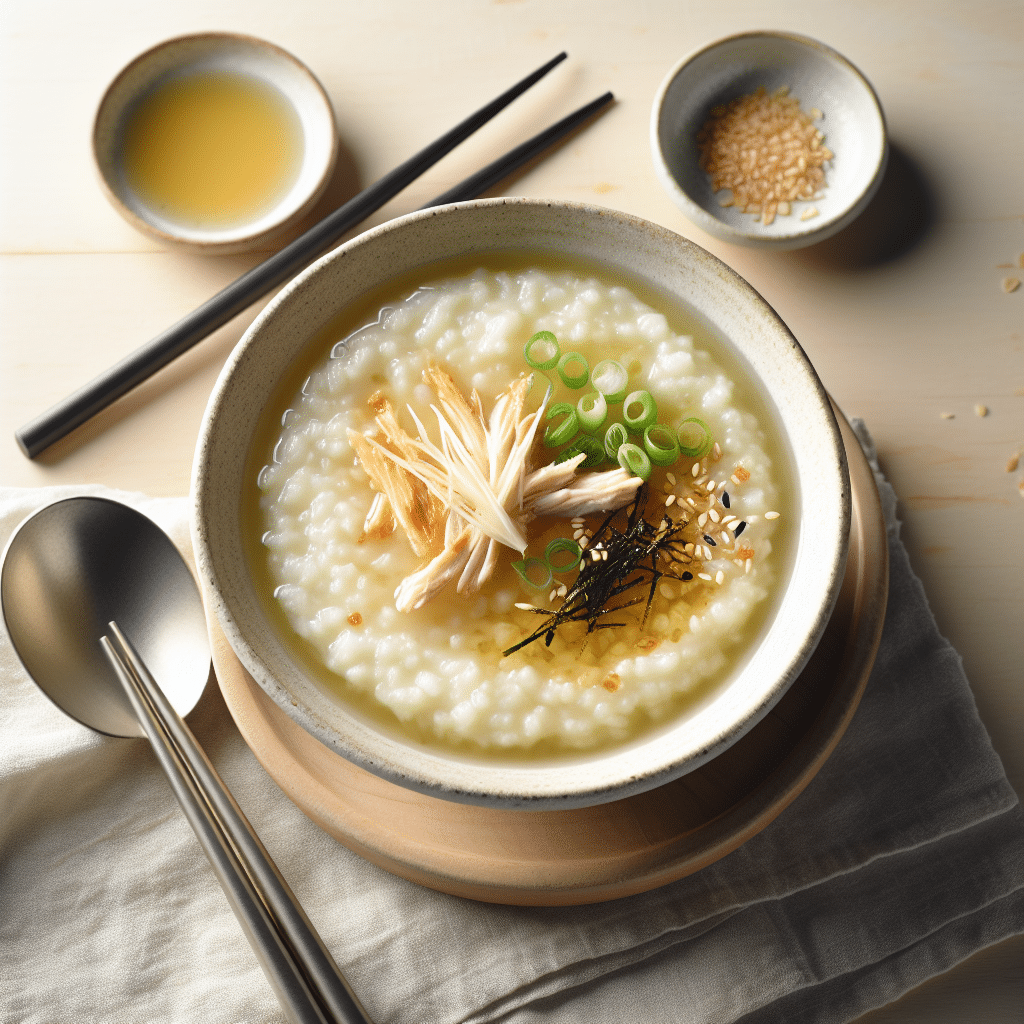
🎧 Dakjuk Chicken Porridge Recipe: How Koreans Make It at Home ASMR Version:
Why Dakjuk is More Than Just a Recipe
Dakjuk isn’t just food — in Korea it’s a bowl of comfort, memory, and care. Many families turn to this mild, nourishing porridge when someone is tired, under the weather, or craving something warm after a long day. Unlike restaurant versions, home-made dakjuk is about feel and texture, not strict measurements. You’ll notice the rice naturally break down as it simmers, giving a soft, creamy consistency that’s gentle on the stomach and rich in flavor. Try seasoning your own bowl with sesame oil or soy sauce at the table — Koreans often personalize each serving this way.
This comforting recipe reflects how Korean families cook simple, nourishing meals at home.
→ Korean Food: Home Cooking, Street Food, and Food Culture
A Comforting Bowl from Everyday Korean Homes
Dakjuk is the kind of dish Koreans turn to when someone simply needs warmth—after a long day, during cold weather, or while recovering from a cold. It’s not fancy or festive. It’s the food a mother or grandmother might stir quietly while telling you to take it easy. Mild, warm, and filling, it’s often remembered as the bowl that helps you feel like yourself again.
How Koreans Make It at Home
Dakjuk isn’t usually made from strict recipes. Home cooks measure with their eyes, trusting the look and feel of the porridge as it simmers. A typical pot starts on high heat to build the broth quickly, then moves to medium once the chicken softens enough to shred.
Most families don’t shop specially for this dish. They reach into the fridge for a few familiar items: some chicken pieces, a small handful of rice, garlic, and a bit of ginger. The goal is a clean, soothing pot—not a restaurant-style version.
The flavor comes from boiling the chicken until the broth turns milky, then stirring so the rice naturally breaks down. When it’s time to eat, everyone seasons their own bowl with sesame oil, soy sauce, or salt. It’s a deeply personal, simple way of enjoying juk.
Ingredients
Main Ingredients
- Chicken drumsticks, thighs, or any bone-in pieces
- Uncooked short-grain rice
- Garlic
- Ginger
- Water
- Green onion
Seasoning Served at the Table
- Salt
- Soy sauce
- Sesame oil
- Black pepper
Step-by-Step Cooking
1. Make a Simple Broth
Place chicken, garlic, and ginger in a pot.
Add enough water to fully cover everything and boil on high until the broth turns slightly cloudy.
2. Add Rice and Simmer
Rinse a small handful of rice and add it to the pot.
Reduce to medium heat and simmer until the rice begins to soften.
3. Shred the Chicken
Remove the chicken briefly, shred it with a fork or chopsticks, and return it to the pot.
Let it continue simmering until the porridge turns thick and creamy.
4. Adjust Thickness
Stir often to help the rice break down.
Add a bit of water if the porridge becomes too thick, or simmer longer if it feels too thin.
Korean Cooking Tips
- Use bone-in chicken for a naturally deeper broth.
- Leave the lid slightly open so the porridge can thicken as it cooks.
- Season at the table, not in the pot, allowing each person to adjust flavor to their liking.
How Koreans Eat It
Families often place the entire pot on the table and let everyone serve themselves. The porridge stays plain, while small dishes of soy sauce, sesame oil, and chopped green onion sit nearby. A drizzle of sesame oil adds aroma; a spoonful of soy sauce offers a salty kick.
Dakjuk also makes an easy next-day breakfast. Leftovers simply get reheated with a splash of water to loosen the texture, turning into a warm, gentle start to the morning.
Variations
Less Spicy
Add a touch of milk or extra water at the end for a softer, milder version—popular for children.
Spicier
Mix gochugaru with soy sauce and sesame oil, then stir it into each bowl for a gentle heat.
Quick Alternative
Use leftover rotisserie or boiled chicken and cook the rice in store-bought chicken broth. It’s not traditional, but it delivers similar comfort with less effort.
A Gentle Closing
Dakjuk is a quiet part of daily Korean life—warm, comforting, and always welcome. If this humble bowl speaks to you, it may lead you to explore more of the calm, practical dishes found in Korean home kitchens.

Ask Seoul Unnie
Still confused by Korean-only menus or everyday situations like this?
Ask Seoul Unnie — real, practical answers from someone living in Korea.
🍜 Korean Food Guides
This article is part of our Korean Food guide series for foreigners.
### Related Guides
Spam mayo rice bowl captures the everyday Korean home-style meal that many locals grew up loving.
Recommended for you
- Korean stone pot – great for cooking warm porridge dishes
- Korean sesame oil – adds aroma to each bowl
- Korean short‑grain rice – ideal for creamy juk texture
- Korean home cooking cookbook – learn more comforting dishes
As an Amazon Associate, I earn from qualifying purchases.