
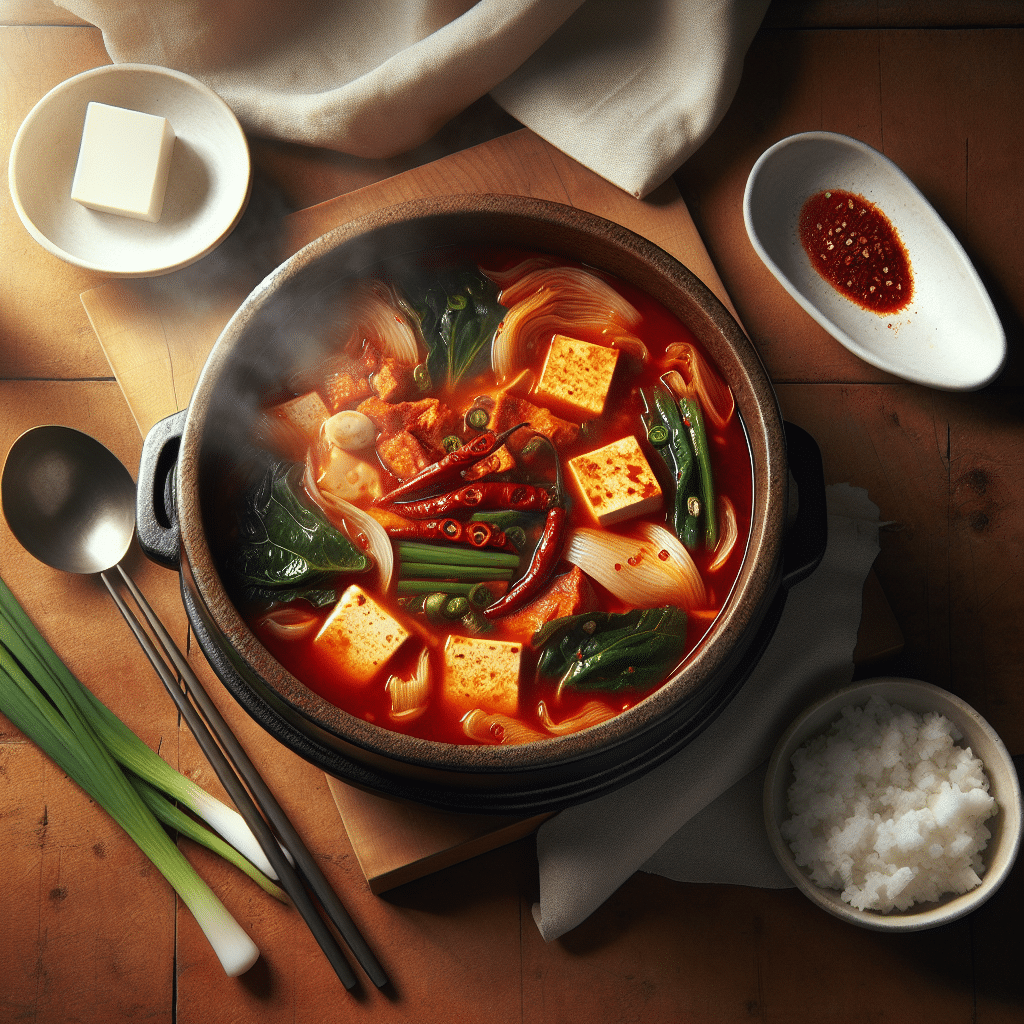
The Comfort of Kimchi Jjigae
A steaming bowl of kimchi jjigae has a way of slowing everything down. Its aroma, warm color, and hearty ingredients invite you to settle in and enjoy a moment of comfort. For many first-time visitors to Korean cuisine, this bubbling stew becomes an instant favorite.
What Makes This Stew Special
Kimchi jjigae is one of Korea’s most beloved home-style dishes. Its flavor is bold yet welcoming—tangy from aged kimchi, savory from pork or broth, and gently warming from chili flakes. Though perfect on a chilly evening, it appears on Korean tables all year long. This is everyday cooking at its best: simple ingredients gaining depth through time, tradition, and slow simmering.
Key Ingredients
- Well-fermented napa cabbage kimchi (a little brine included)
- Thinly sliced pork belly or pork shoulder
- Tofu (soft or medium-firm), cut into cubes
- Onions and scallions
- Minced garlic
- Gochugaru or gochujang
- Anchovy-kelp stock or vegetable broth
- Soy sauce or a pinch of sugar, if needed
- Optional: enoki mushrooms, zucchini, potato, sesame oil, tuna, ham, or mushrooms
How to Make It at Home
- Sauté the pork. Place sliced pork in a pot and cook gently until it releases some fat. Add garlic and onions and cook until softened.
- Add the kimchi. Stir in several handfuls of aged kimchi and let it cook briefly to deepen the flavor.
- Add the broth. Pour in enough stock to cover everything and include a bit of kimchi brine for extra character.
- Season. Add gochugaru or gochujang to adjust color and heat. Add soy sauce or a little sugar only if the broth needs balance.
- Simmer. Let the stew bubble until the kimchi softens and the broth thickens.
- Add tofu. Place tofu on top and continue simmering until warmed through.
- Finish with scallions. Add sliced scallions just before serving for freshness.
- Serve hot. Enjoy directly from a ttukbaegi if you have one, or ladle into bowls with warm rice and simple side dishes.
Tips, Variations, and Serving Ideas
- Use well-fermented kimchi for the best depth of flavor.
- Swap the protein: canned tuna, ham, or mushrooms all make delicious alternatives.
- Adjust the spice level by choosing between gochugaru (milder heat) and gochujang (sweeter richness).
- Add noodles or sliced rice cakes for a heartier, one-pot meal.
- Pair with simple sides like cold kimchi, pickled radish, or seasoned seaweed.
- Reheat leftovers—the flavor becomes even richer the next day.
Why the World Loves Kimchi Jjigae
Kimchi jjigae reflects the heart of Korean home cooking: resourceful, comforting, and deeply flavorful. It transforms everyday ingredients into a warm, satisfying dish meant to be shared.
As Korean cuisine becomes more popular globally, this stew offers newcomers a taste of the comforting side of Korean food—not just barbecue or street snacks, but the meals that families enjoy at their own tables. Its approachable nature makes it easy to love, even for those unfamiliar with fermented ingredients. Many travelers describe their first bowl of kimchi jjigae as the moment they understood the soulful warmth behind Korean cooking.
It also encourages exploration of other classic dishes such as bibimbap, tteokbokki, and regional soups. Sharing a bubbling pot in the center of the table offers a glimpse into how Korean meals bring people together.
Closing
Kimchi jjigae may look simple, but each spoonful carries generations of flavor and comfort. Try making it at home, serve it with a few easy sides, and enjoy a warm, satisfying introduction to Korean home cooking. This humble stew might just become one of your new favorites.
Want to explore more delicious Korean flavors?
Check out these popular dishes you’ll love:
Recommended for you
- Korean cooking starter kit – helpful for trying classic dishes at home
- Gochujang chili paste – key ingredient for many Korean flavors
- Korean stone bibimbap bowls – great for hot rice dishes
- Korean street food cookbook – ideas for recreating famous snacks
As an Amazon Associate, I earn from qualifying purchases.