
A Warm Introduction to Japchae
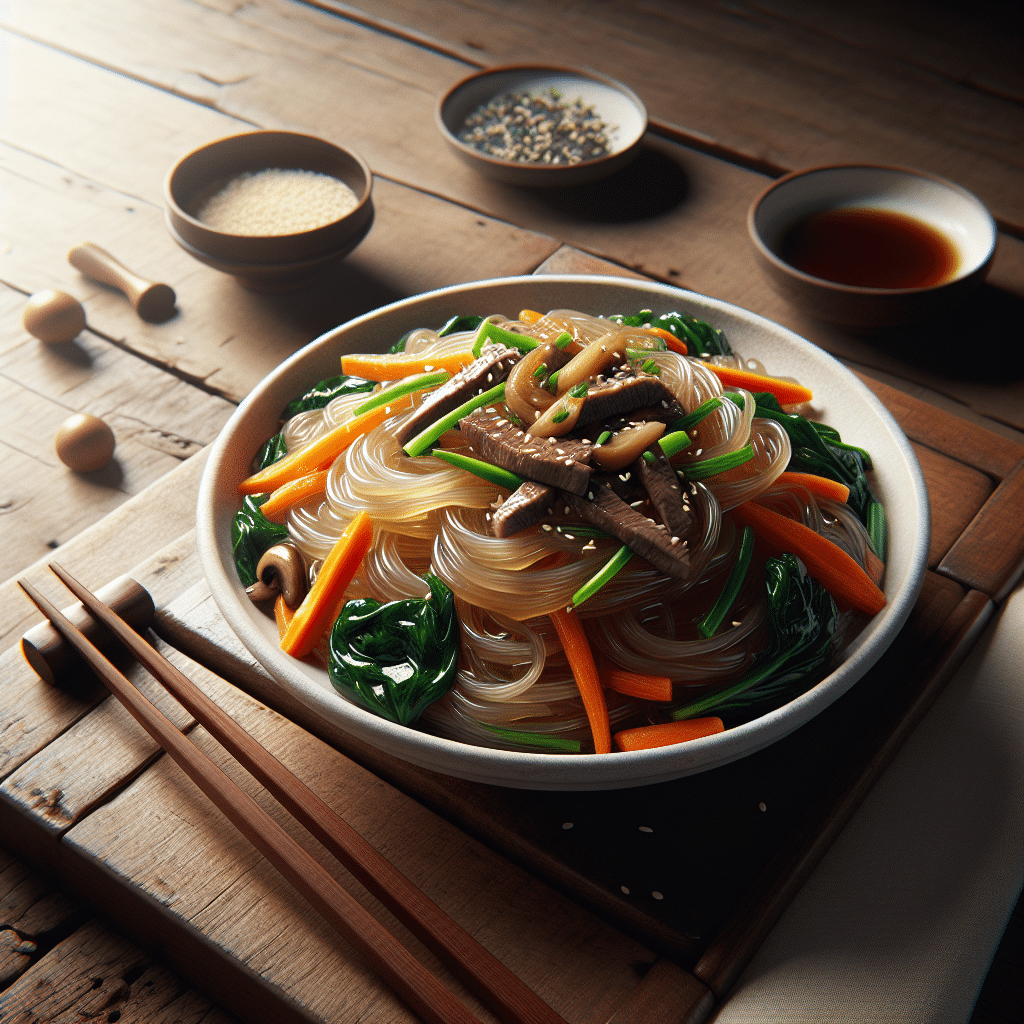
A glossy bowl of japchae—Korea’s beloved sweet potato glass noodle stir-fry—has a way of feeling instantly welcoming. Its bright colors, tender noodles, and gentle balance of savory and slightly sweet flavors make it a dish that many people fall in love with at first bite. Whether enjoyed warm or at room temperature, japchae fits beautifully into everyday meals, potlucks, and celebrations alike.
What Makes Japchae Special
Japchae shines because it transforms simple ingredients into something surprisingly deep and satisfying.
The noodles, made from sweet potato starch, become wonderfully chewy and translucent when cooked. They hold their shape well, stay bouncy, and absorb seasoning without getting mushy.
One of the hallmarks of this dish is that each component is cooked separately. This keeps the vegetables crisp and vibrant, the beef tender, and the flavors clean. When everything is combined with a lightly sweet soy seasoning, the result is a harmonious mix of soft, crisp, and tender textures in every bite.
Because it tastes great warm or cool, japchae often appears on Korean New Year tables, at birthdays, and in lunch boxes. It feels familiar and comforting—even to those discovering Korean cuisine for the first time.
Ingredients
Here is a detailed list of what you need, along with easy substitutions:
- Sweet potato glass noodles (dangmyeon), dried
- Fresh spinach or baby spinach
- Carrots, julienned
- Shiitake mushrooms (fresh or rehydrated), or any mushrooms you prefer
- Onion, thinly sliced
- Sliced beef such as flank, ribeye, or any lean tender cut
- Garlic, minced
- Light soy sauce or a mild Korean-style soy seasoning
- Sesame oil, plus a little neutral oil for sautéing
- A touch of sugar or honey
- Green onion, sliced, for garnish
- Sesame seeds for finishing
- Optional add-ins: bell peppers, wood ear mushrooms, tofu, Korean fish cake, or extra greens
How to Make Japchae at Home
1. Prepare the noodles
Soak the dried noodles in warm water until slightly softened. Boil briefly until chewy, then rinse under cold water and drain. Toss with a little sesame oil to prevent sticking.
2. Cook the spinach
Blanch quickly, rinse under cold water, squeeze gently, and season with a bit of soy sauce and sesame oil.
3. Sauté the vegetables
Cook the carrots, onions, and mushrooms separately in a small amount of oil. Keep the heat moderate so they soften while staying bright.
4. Cook the beef
Sauté the beef with garlic until just tender. Season lightly with soy sauce and a small pinch of sugar.
5. Combine everything
In a large pan or bowl, add the noodles, vegetables, and beef. Drizzle soy sauce, sesame oil, and a little sugar over the top.
6. Mix gently
Toss until the noodles turn glossy and evenly coated. Adjust seasoning as needed.
7. Serve
Top with sesame seeds and green onion. Enjoy warm, or let it cool for a room‑temperature version.
Tips, Variations, and Serving Ideas
- For a vegetarian or vegan version, skip the beef and add tofu or extra mushrooms.
- Add more garlic or a splash of mild stir-fry sauce if you prefer stronger seasoning.
- To save time, cook the vegetables together, though the colors and textures will be less distinct.
- Japchae stores well; refresh it with a drizzle of sesame oil before serving again.
- Add a spicy touch with sliced chili or a little gochujang on the side.
- Pair with simple grilled meats or a spread of Korean side dishes.
Why Japchae Is Loved Worldwide
Japchae captures many qualities that make Korean cuisine appealing across cultures. It is colorful, wholesome, and naturally gluten-free thanks to its sweet potato noodles. The method of cooking each ingredient individually reflects Korea’s emphasis on balance and care—values that shine through in the final dish.
For those new to Korean food, japchae often becomes a comforting entry point. It’s mild, inviting, and full of familiar ingredients. As Korean flavors grow more popular globally, japchae continues to be one of the easiest and most enjoyable dishes for home cooks to try.
It also carries cultural meaning. In Korea, japchae often appears during holidays and family gatherings as a symbol of abundance and warm hospitality. Sharing a generous platter of glossy noodles is a gesture of welcome that resonates across cultures.
Closing
Japchae brings together color, texture, and comfort in a way that feels both traditional and effortlessly approachable. Whether you’re exploring Korean cuisine or simply looking for a new favorite noodle dish, japchae offers a warm, balanced, and deeply satisfying experience. Try making it at home—you may find yourself returning to it often.
You are generating 2 internal links for a blog post.
Your job is to recommend ONLY 2 articles from the same website (whatskorealike.com), choosing the posts most closely related to the topic.
Rules:
– Select exactly 2 internal links. No more.
– The links must be relevant to the topic of the current article.
– Only use URLs from whatskorealike.com.
– Do NOT include any external websites. No Wikipedia, no TTMIK, no Maangchi, no VisitKorea.
– Make the anchor text short, natural, and helpful.
– Output must be ONLY the following HTML block:
🍜 Korean Food Guides
This article is part of our Korean Food guide series for foreigners.
Recommended Products
- Sweet potato glass noodles – key ingredient for authentic japchae
- Korean sesame oil – adds aroma and glossy finish
- Korean soy sauce – for the classic japchae seasoning
- Korean home cooking cookbook – more dishes like japchae
As an Amazon Associate, I earn from qualifying purchases.