
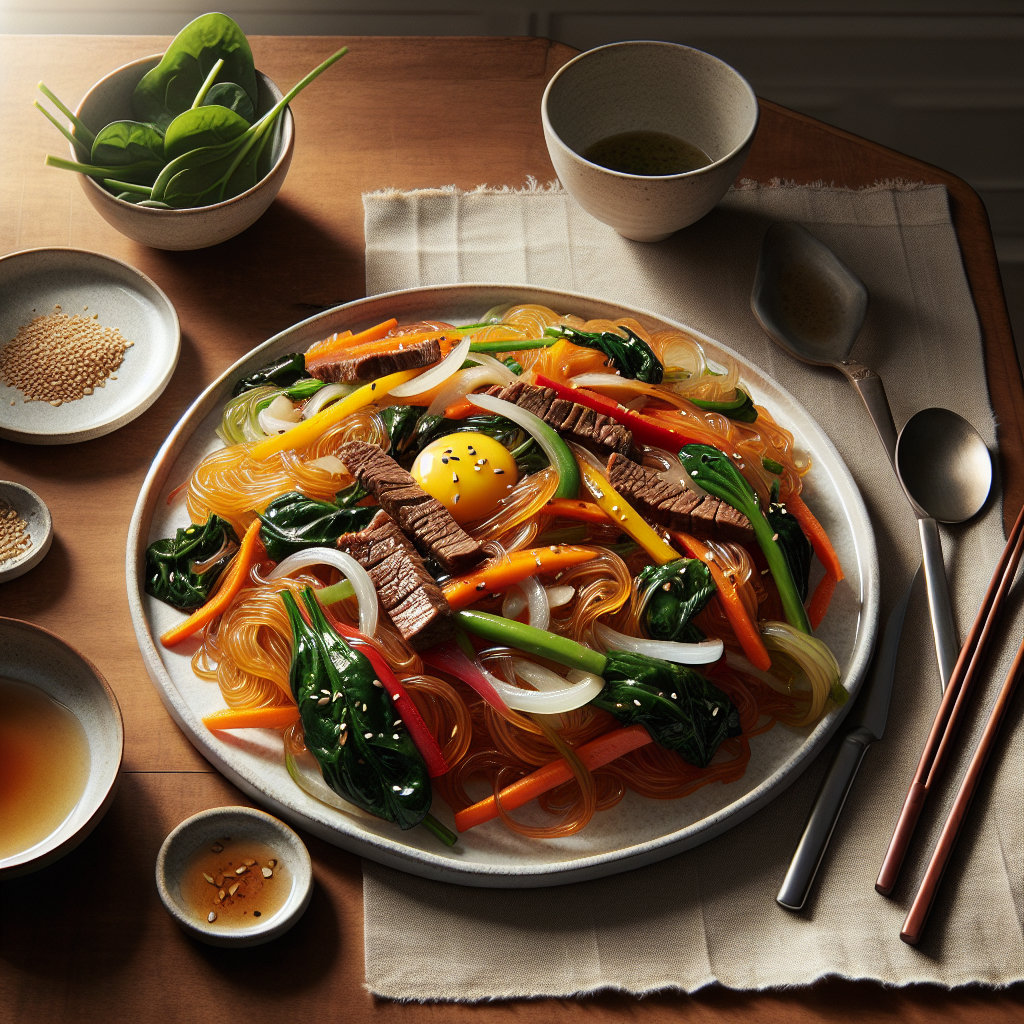
Japchae: A Colorful, Comforting Taste of Korea
Japchae is one of those dishes that immediately draws you in — glossy noodles, vibrant vegetables, and a savory aroma that feels both festive and comforting. Many visitors to Korea fall in love with it at first bite, while for Koreans, it’s a beloved dish for celebrations as well as everyday meals.
What Makes Japchae Special
Japchae is a stir‑fried combination of Korean sweet potato glass noodles (dangmyeon), vegetables, and lightly seasoned beef or plant‑based protein. What makes it stand out is its balance of flavors and textures:
- Noodles that are springy and pleasantly chewy
- Crisp vegetables that keep their freshness
- A mild sweetness from soy-based seasoning
- A finishing touch of sesame oil for aroma
Traditionally served at holidays and gatherings, japchae carries a sense of warmth and generosity — it’s a dish made to be shared.
Ingredients
- Sweet potato glass noodles (dangmyeon), soaked or parboiled
- Thinly sliced beef or plant-based protein, seasoned with soy sauce and a little sugar
- Carrots, onions, spinach, red and yellow bell peppers, shiitake mushrooms
- Minced garlic
- Soy sauce, sugar or mild sweetener, sesame oil
- Sesame seeds for garnish
- Optional: wood ear mushrooms, scallions, thin egg ribbons (jidan)
How to Make Japchae at Home
- Soak or briefly boil the noodles until clear and flexible. Drain and set aside.
- Lightly season the beef or protein with soy sauce, sugar, and a touch of sesame oil.
- Slice all vegetables into thin, even strips; keep spinach separate.
- Stir-fry each vegetable group individually with a little oil and a pinch of salt. Set aside.
- Stir-fry the beef until browned.
- Lightly cook the spinach, then squeeze out excess moisture.
- Season the noodles with soy sauce, sugar, garlic, and sesame oil. Mix until glossy.
- Combine noodles, vegetables, and beef in a wide pan. Stir gently over low heat to blend flavors. Adjust seasoning.
- Finish with sesame oil and sesame seeds. Add egg ribbons if you like.
Tips, Variations, and Serving Ideas
- For a vegetarian or vegan version, use tofu, mushrooms, or extra vegetables.
- Toast sesame seeds for deeper aroma.
- Use colorful vegetables for a vibrant look.
- Season the noodles while warm to help them absorb flavor.
- Add a little black pepper or a touch of oyster sauce for extra depth.
- Japchae tastes great at room temperature, ideal for picnics and lunchboxes.
- Pair it with simple Korean side dishes for a fuller meal.
Why People Love Japchae Worldwide
Japchae is an inviting introduction to Korean cuisine. Its mix of sweet and savory flavors feels familiar, while the unique texture of sweet potato noodles offers something new to global eaters. Because it isn’t spicy or heavy, it appeals to a wide range of tastes.
The dish also represents a hallmark of Korean cooking: preparing each ingredient separately so it keeps its own character. Even when mixed together, every vegetable remains distinct, creating a harmonious, layered experience.
Japchae often appears at birthdays, holidays, and large gatherings, reflecting a spirit of hospitality and sharing. As Korean food becomes more popular around the world through travel, restaurants, and entertainment, japchae continues to grow as a global favorite.
A Warm Closing
Japchae is colorful, comforting, and surprisingly simple once you know the basic steps. Whether you cook it for a celebration or a relaxed weeknight dinner, it brings balance, warmth, and a hint of festivity to the table. If you’re exploring Korean home cooking, japchae is a wonderful place to begin — a dish that welcomes you into the flavors and spirit of Korea with every savory bite.